Why It Happens Here
Druid Hills is a small piece of our map compared to the roughly 48,457 households spread across the territory we cover out of Norcross - just under 3,600 households sit inside this one pocket, and most of the houses on them went up around 1964. That single build year matters more than it looks. A house from 1964 has usually been through at least two openers already: the original chain-drive unit that came with the house, and a replacement from sometime in the 80s or 90s. What we see now is often that second-generation opener finally giving out - worn gears, a dead capacitor, logic boards that haven't been made in years. The housing stock here lines up with the wider area's 1960s-70s era homes, so the garage itself (header height, framing, the old lightweight doors some of these openers were sized for) tends to be smaller and lighter than what newer openers are built to lift without adjustment.
What Can Go Wrong
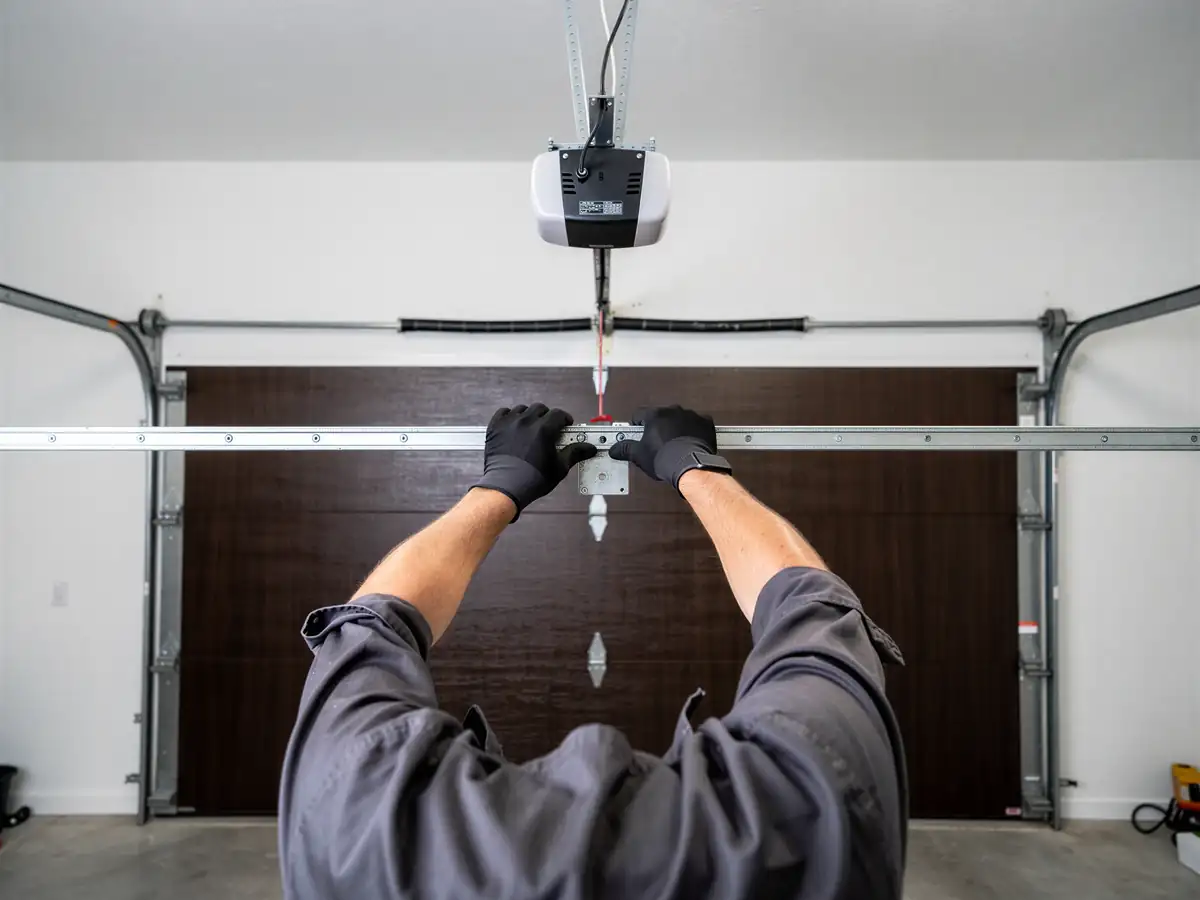
On an opener this old, the failure is rarely just the opener. The travel limits drift because the gear-and-sprocket assembly has worn unevenly, so the door reverses for no reason or stops short of the floor. Safety sensors from that generation, if they exist at all, may not meet current standards, which matters more if you're also replacing the door itself. Chain-drive units from this era are loud and the rail sags over decades, which throws off alignment with the trolley. We also run into houses where a well-meaning owner swapped in a newer logic board years back but kept the original rail and motor housing - a mismatch that causes intermittent failures nobody can diagnose by looking at it. None of this is unusual for a house pushing sixty years old; it's just what happens on that timeline.
What It Costs
We don't have a fixed number to quote on this page, and we'd rather leave it blank than make one up. What we can tell you is what drives the cost on a house like the ones common to this area: whether the existing rail and track can be reused, whether the door itself (often original to a 1960s build) is light enough for a standard belt or chain unit or needs a heavier-duty drive, and whether the electrical run to the opener needs updating to meet current code. Households here report a median income well above the wider service area's $73,075, and we mention that only because it tends to mean more owners here ask about quieter belt-drive units over the cheaper chain-drive option - a preference, not a requirement.
The Symptom
The call we get most from this part of the map sounds the same almost every time: the opener motor runs, the light comes on, but the door doesn't move, or it moves a few inches and stops. On a unit this old that's usually a stripped drive gear inside the motor housing - a $20 part buried under a cover that takes an hour to open and five minutes to swap once it's open, but by the time the gear is that far gone, the rest of the unit is usually close behind it. If your door does this and the opener is original to a house built in the early-to-mid 1960s, replacing the whole unit is almost always the better call than parting it out.