The DIY Question
You can do some of this yourself. Wipe down the tracks, check that the rollers aren't cracked, and listen for grinding when the door moves. That's reasonable homeowner maintenance and it costs nothing but time.
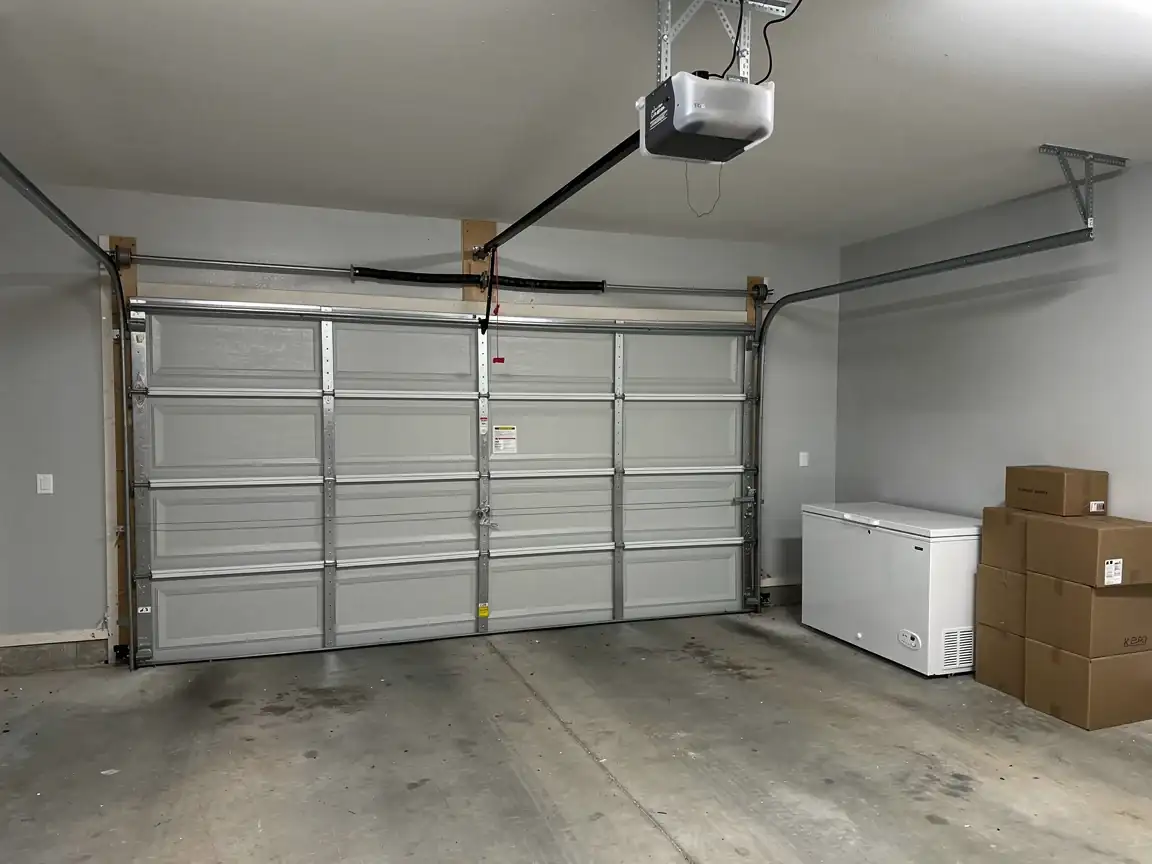
What you shouldn't touch is the torsion spring or anything under tension. These systems store enough force to break a hand, and on the older doors common across this service area, the hardware wasn't built with quick-release safety cables the way newer doors are. If your opener is straining, if the door drops instead of lowering smoothly, or if a cable looks frayed, that's a call, not a project.
A full tune-up also means checking the balance point by hand with the opener disconnected, something most owners never do because it requires disconnecting the trolley safely first. We check balance, lubricate moving parts with the right grease for track hardware (not WD-40, which attracts grit), tighten loose hinges, and inspect the spring for rust pitting and wear. None of that needs a technician's hands to go wrong if you're careless, but none of it is exotic either. The honest answer: DIY the cleaning and the listening, leave the spring and cable work to someone who does it daily.
Why It Happens Here
Housing in the areas we cover went up mostly between 1951 and 2012, with the bulk of it dating to the 1960s and 70s across the 18 named communities in this service area. That matters because a door installed in 1972 has had fifty-plus years of spring cycles, and most owners never had it serviced in between. Torsion springs are rated for a number of open-close cycles, not years, and a door that's been opened twice a day for five decades is well past the original hardware's design life even if it still looks fine.
The cold moderate climate band this region sits in adds a second factor. Winter cold snaps make steel springs more brittle and lubricant thicker, so a spring that's already fatigued is more likely to snap on a cold morning than a warm one. It's not dramatic weather, just enough seasonal swing to stress parts that are already marginal.
Put those two together and you get a specific, common failure: original or early-replacement torsion springs, tired from decades of cycles, giving out during a cold stretch. That's the maintenance call we see most, and it's largely preventable with an inspection before the spring actually breaks.
The Symptom
The door feels heavier than it used to
Or the opener strains and groans partway through the cycle. Sometimes it's a rattling track, sometimes a door that reverses itself for no clear reason. These are balance and spring-wear symptoms, not opener failures, even though owners usually blame the opener first.
Another pattern: the door opens fine but closes unevenly
One side dropping faster than the other. That's usually a cable or spring tension mismatch between the two sides, and it gets worse, not better, if you keep using the door without attention.
If you hear a loud bang and the door won't move at all, that's very likely a broken spring
Don't force the opener. Disconnect it and leave the door down until it's inspected.
One honest limitation: a tune-up extends the life of parts that still have life in them
If a torsion spring is already visibly stretched or pitted with rust, maintenance won't un-wear it, and we'll tell you to replace rather than service it. Paying for lubrication on a part that's about to fail anyway isn't a service we'll recommend just to bill a visit.
Booking a Visit
We serve Norcross and the surrounding communities, including Berkeley Lake, Doraville, Mountain Park, Clarkston, Stone Mountain, and the other nearby areas in this part of the metro. If your address falls within that range, we can come out for a maintenance visit.
A typical visit covers a balance check, hardware inspection, track and roller condition, spring wear, and lubrication of moving parts. We'll tell you plainly if something needs replacing instead of servicing, and we won't talk you into work the door doesn't need.
Given the age of the housing stock in this area, median year built 1977, we generally recommend a maintenance check every year, more often if the door sees heavy daily use. If you're not sure how old your opener or spring setup is, that's fine. We'll check it on arrival.
Reach out through our site to get scheduled.