When to Get Help
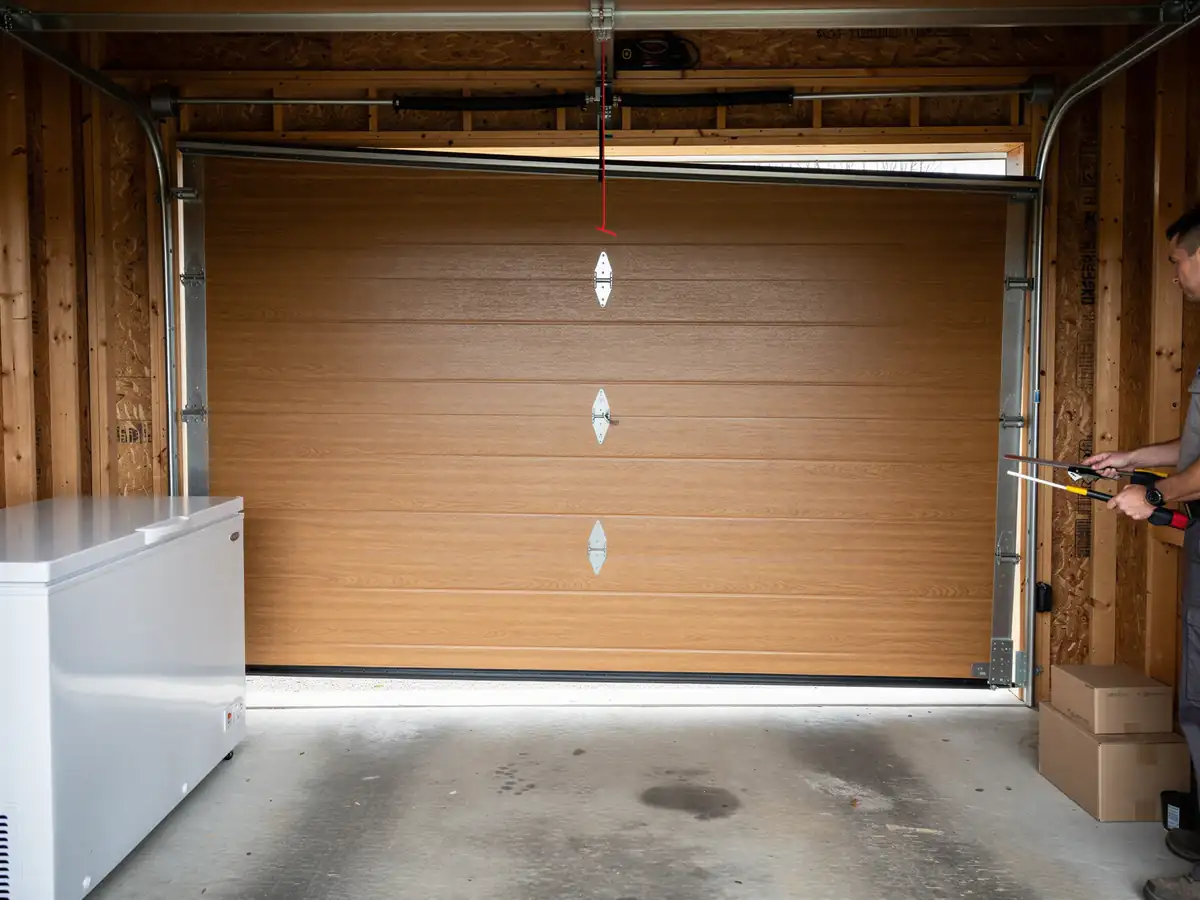
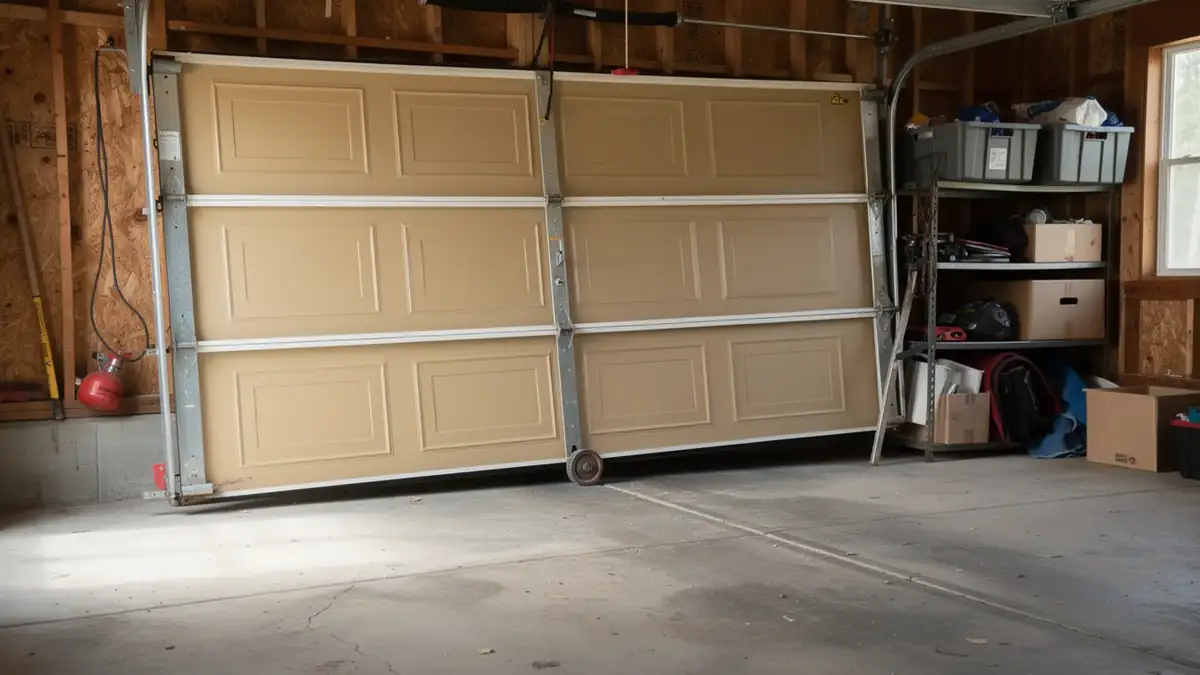
Stop using the door the moment you hear a scrape, a bang, or see a roller sitting outside the track instead of in it. A door that's visibly tilted, hanging an inch lower on one side, or dragging against the track rail is already off and every cycle after that bends things further - the track, the roller stem, sometimes the panel itself. If the door came off because something hit it, or a cable snapped and let one side drop, don't try to force it back onto the track yourself. The spring is still loaded and the panel is unsupported, and that's how people lose fingers.
If the door is just rubbing lightly against one side of the track and still opens and closes, you've got a little time, but not much. A loose roller bracket today is a bent track next week once the door keeps riding against it. For a lot of the houses around Norcross, with original brackets still lag-bolted into joists that are decades old, "a little loose" doesn't stay little for long. Call before the door jumps the track entirely rather than after.
The Problem
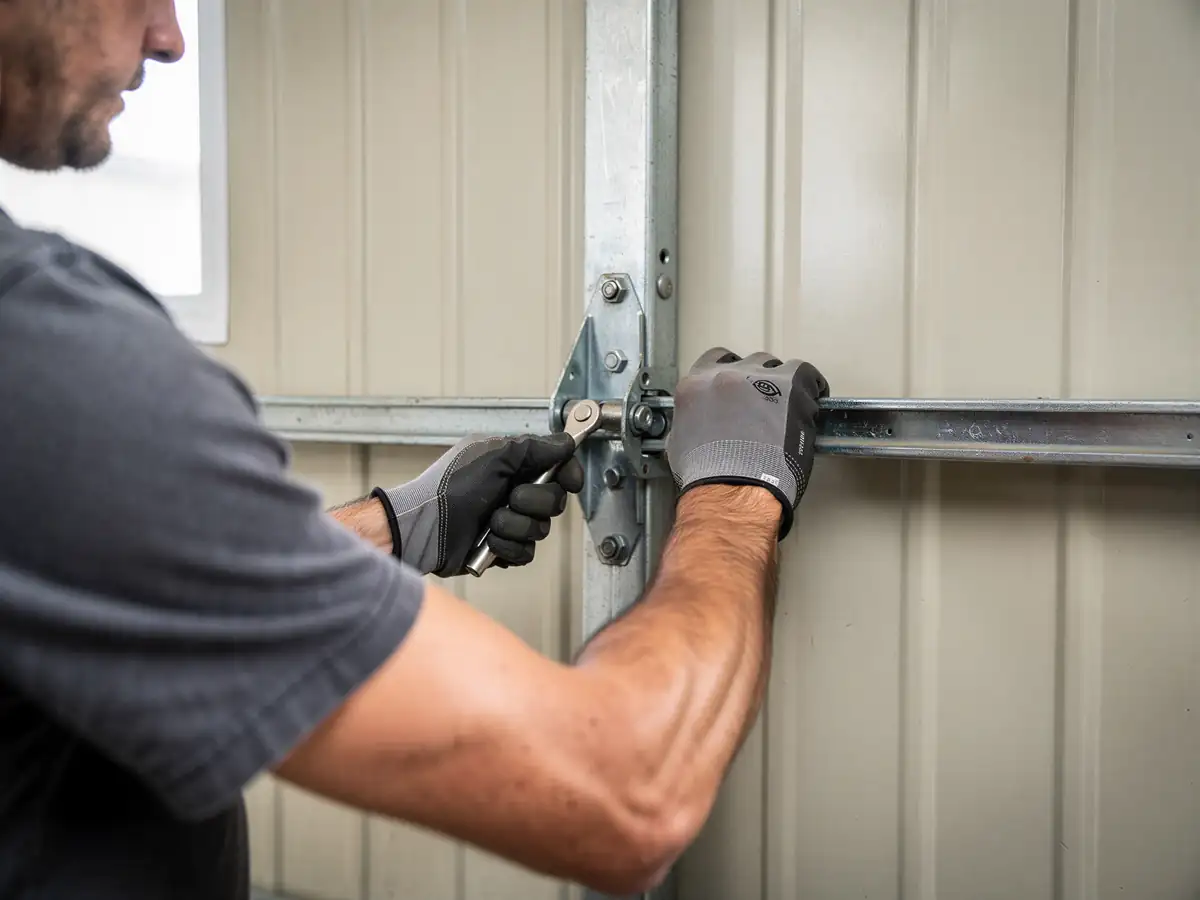
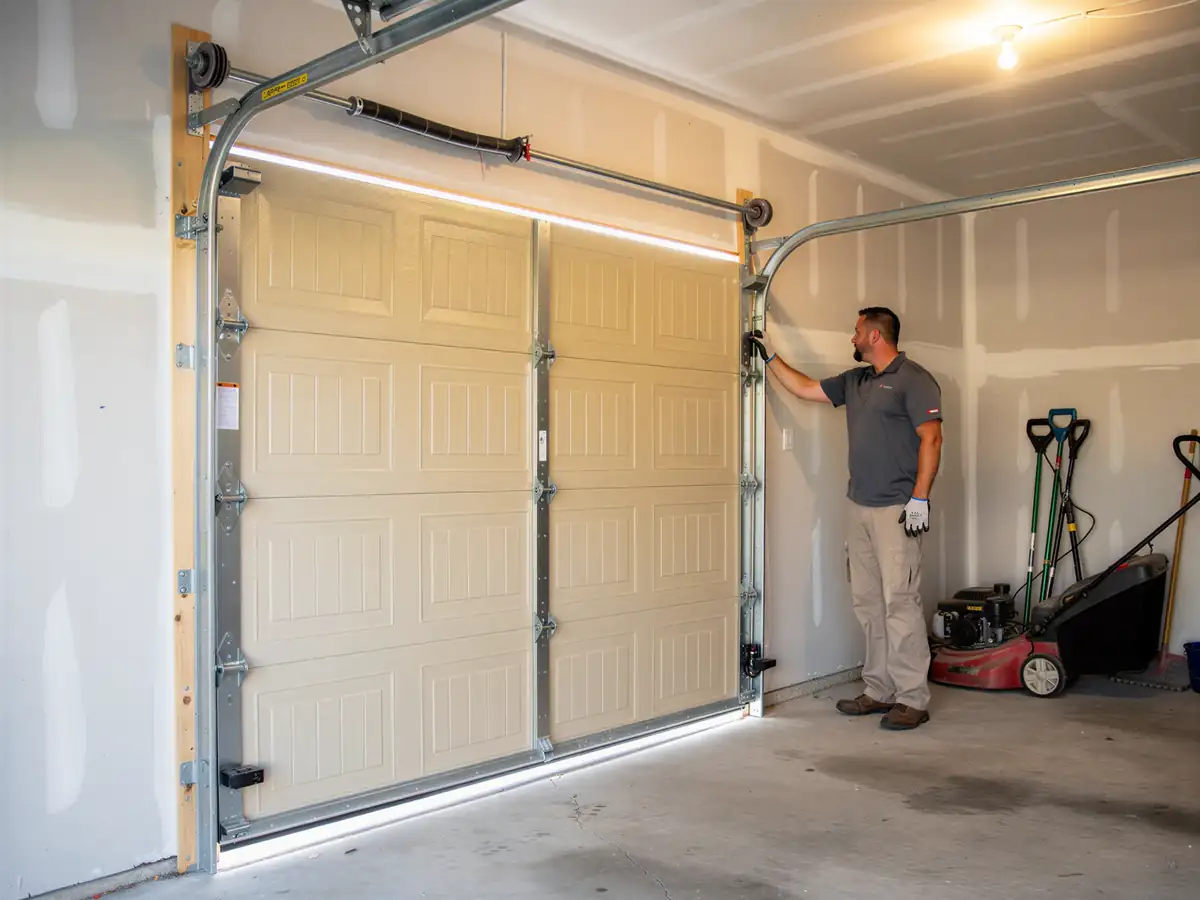
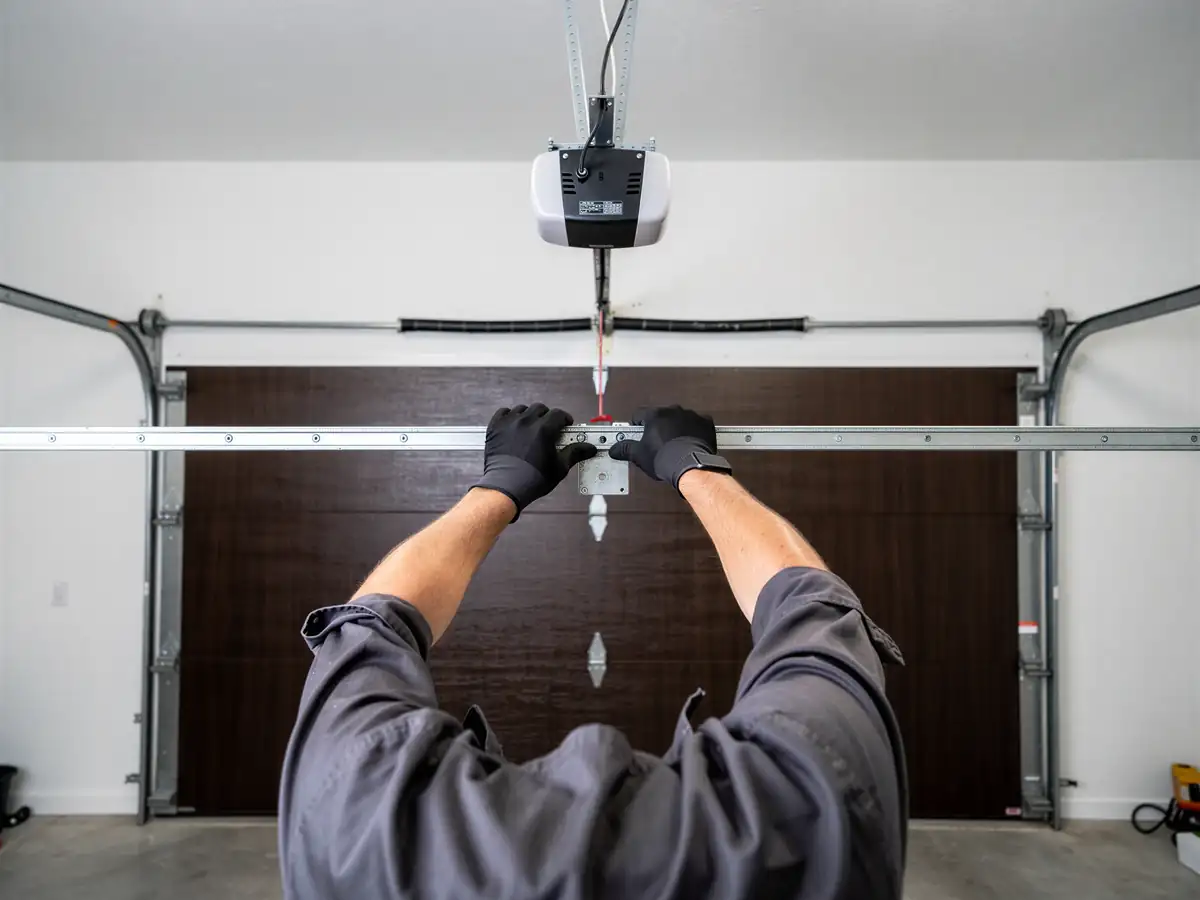
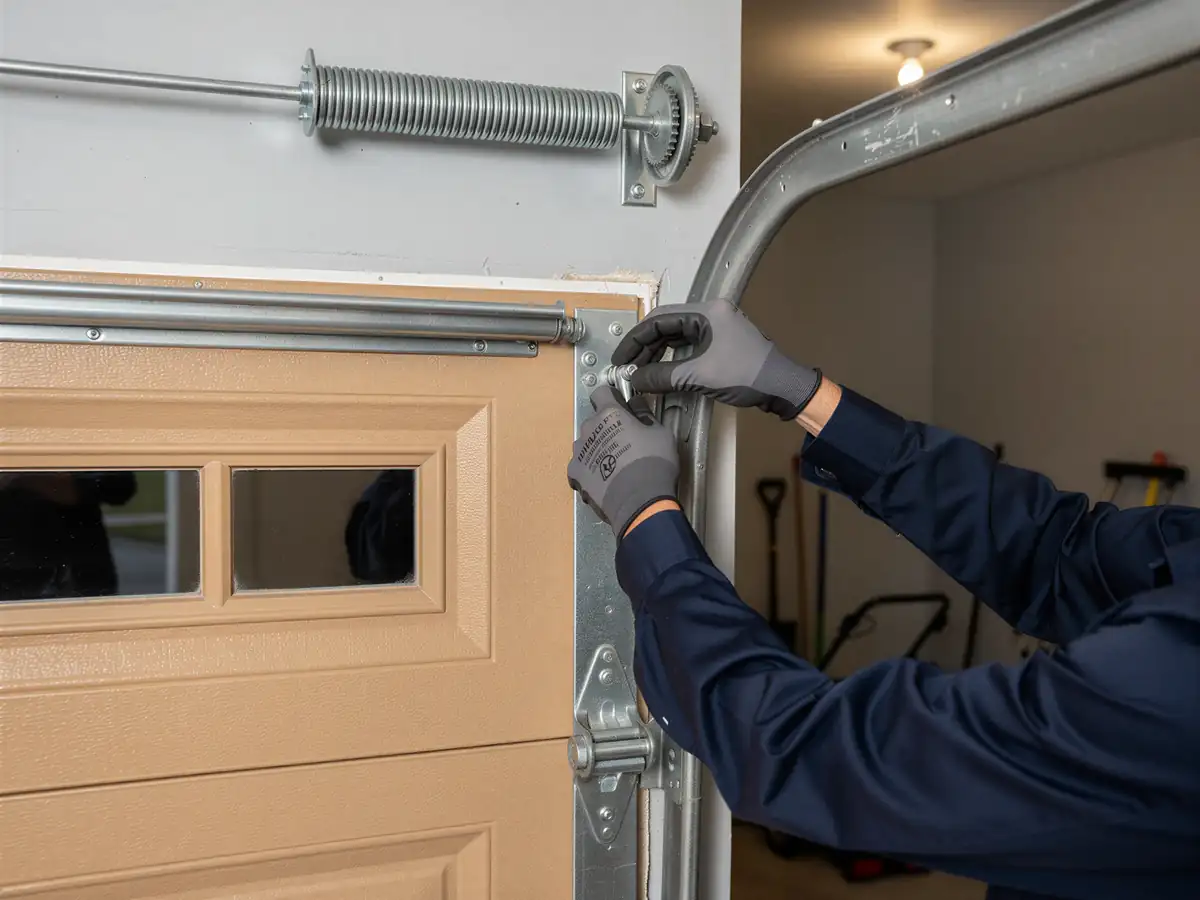
A garage door runs on two vertical tracks and, for most residential doors, a horizontal track section bolted to the ceiling framing. Rollers ride inside that track, and the whole thing holds its shape through a handful of brackets. When a door goes off track, it's almost always one of three things: a bent track rail (usually from an impact - a car bumper, a stored ladder, a kid's bike), a roller that's worn down or broken so it no longer rides inside the channel, or a bracket that's pulled loose from whatever it's fastened to.
That third cause is the one that matters most for older houses. The horizontal track brackets aren't bolted to steel - they're lag-screwed into wood ceiling joists. Wood moves. It dries out, it shrinks, and over enough cycles the lag screw sits in a hole that's gotten slightly bigger than the screw. The bracket starts to sag under the door's weight, the track pulls out of alignment by a fraction of an inch, and a roller that used to track straight starts climbing the edge of the rail instead of riding in the middle of it. That's the slow version of coming off track. The fast version is a direct hit that bends the rail on the spot.
How Local Conditions Play In
Norcross's housing stock runs from 1951 to 2012
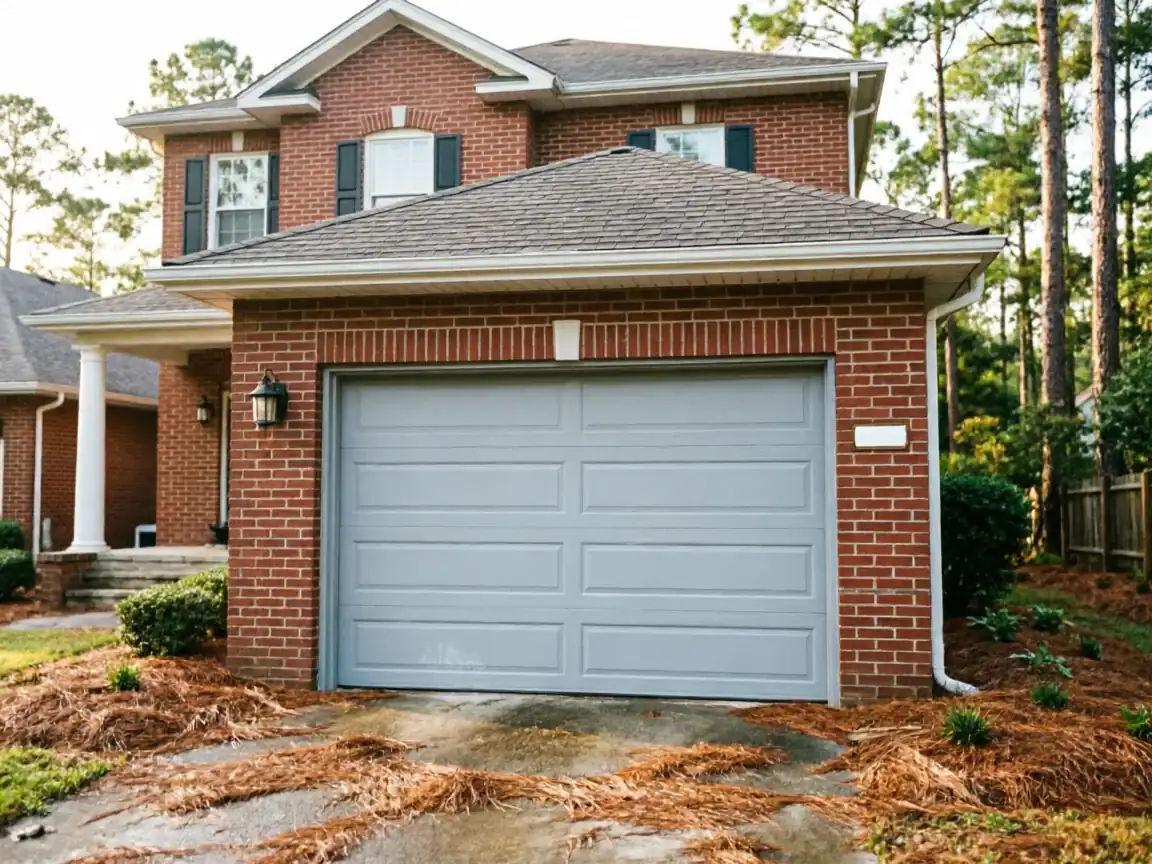
With most of it concentrated in the 1960s and 70s and a median build year of 1977. That matters here specifically: a door installed when a house went up in, say, 1968 has had over fifty years of thermal cycling to work on its original hardware. The cold-moderate climate through this part of Georgia isn't brutal, but it's enough swing, winter to summer, for wood framing to expand and contract year after year - and that's exactly the movement that loosens a lag-bolted bracket over decades rather than months.
Across the 18 communities inside this service area
From Berkeley Lake three miles out to Fair Oaks twenty miles out - that same build pattern repeats. A house in Stone Mountain or Scottdale built in the same era as one in Norcross is working with the same vintage of ceiling joist and the same original track hardware, much of it never upgraded since the first install. So when we get a call about a door that's off track, the house's age usually tells us more than the weather that day did. It's less about a single storm and more about sixty years of small movement finally catching up with one bolt.
- 18 communities
What It Costs
What a job runs depends entirely on which of the three causes it is. A bracket that's worked loose is often a straightforward re-seat and tighten, sometimes with a new lag screw set into solid wood a couple inches over from the worn-out hole. A bent track section usually needs replacing outright - straightening steel rail rarely holds, and a patched track will just bend again at the same spot. Worn rollers get swapped for new ones, which is cheap compared to the other two.
Where it gets more expensive is when the bracket damage goes deeper than the bolt hole - if the joist itself has split or rotted, that's carpentry work before the track goes back up, and that's a different kind of job than a door repair. We'll tell you straight if that's what we're looking at rather than bolting a bracket to wood that won't hold it.
We don't quote a number without seeing the door - a single bent roller and a sagged bracket on both tracks are not the same job, and guessing on the phone does nobody any favors. What we can tell you up front is which of the three causes you're dealing with usually shows itself the moment we're standing in the garage looking at it.