When to Get Help
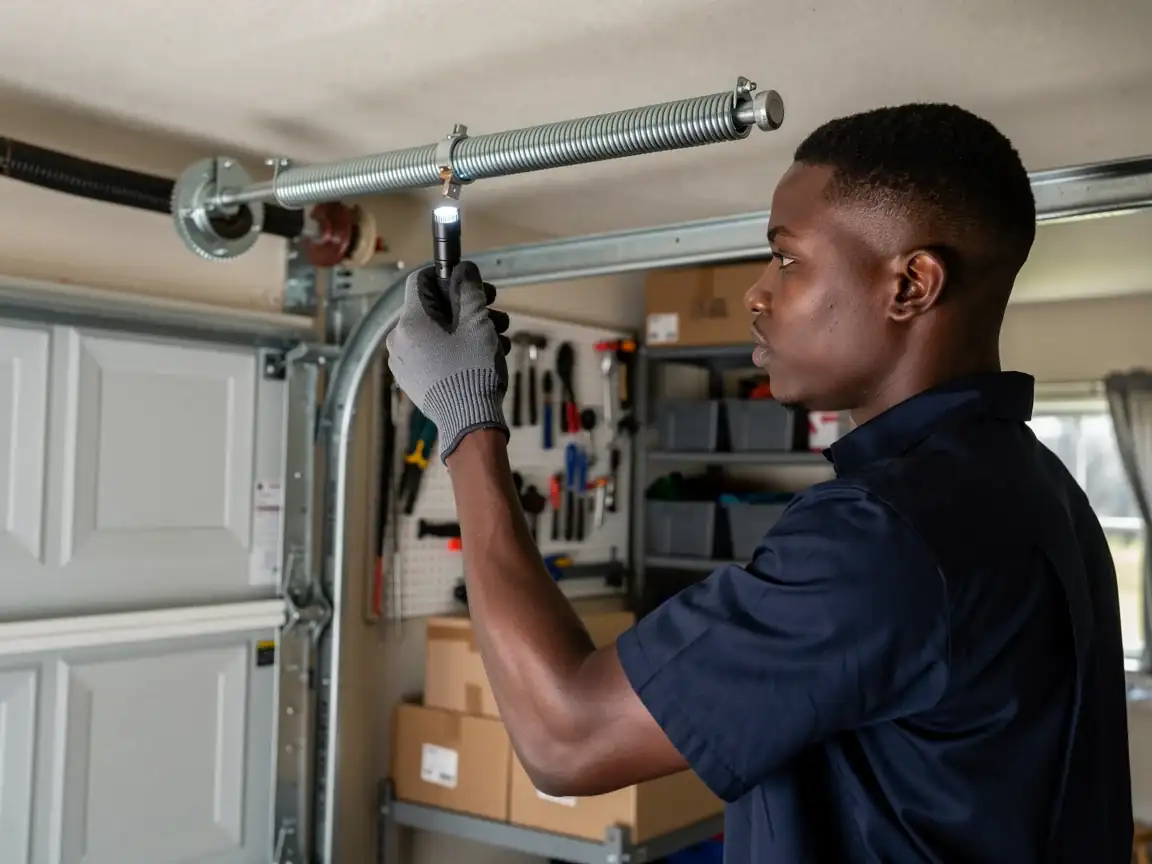
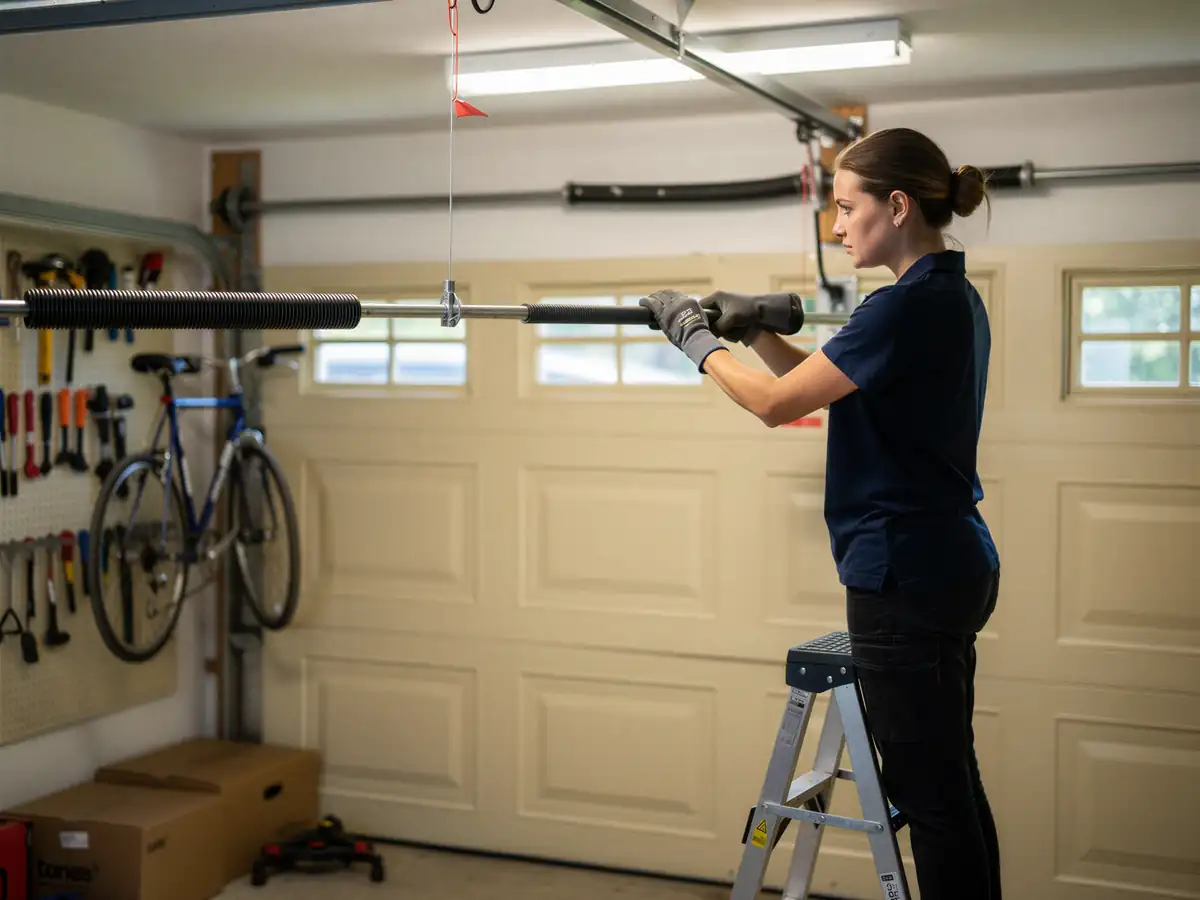
A garage door that's quiet one week and grinding the next isn't being dramatic - it's reporting wear. If you hear a sharp bang on opening, stop using the door and call. That's almost always a torsion spring either breaking or about to. A slow grinding sound as the door travels usually means a roller has flat-spotted or a track has pulled away from the wall, and it won't fix itself by ignoring it.
A chirp or squeak on every cycle is the least urgent of the common noises - it's often just a dry hinge or roller bearing - but in a house built before the 1990s, that squeak can also be the first sign that the original hardware is finally giving out after decades of use. Given that most homes on this side of Norcross date to the 1951-2012 range with the bulk from the 1960s and 70s, a lot of that original gear is still in service.
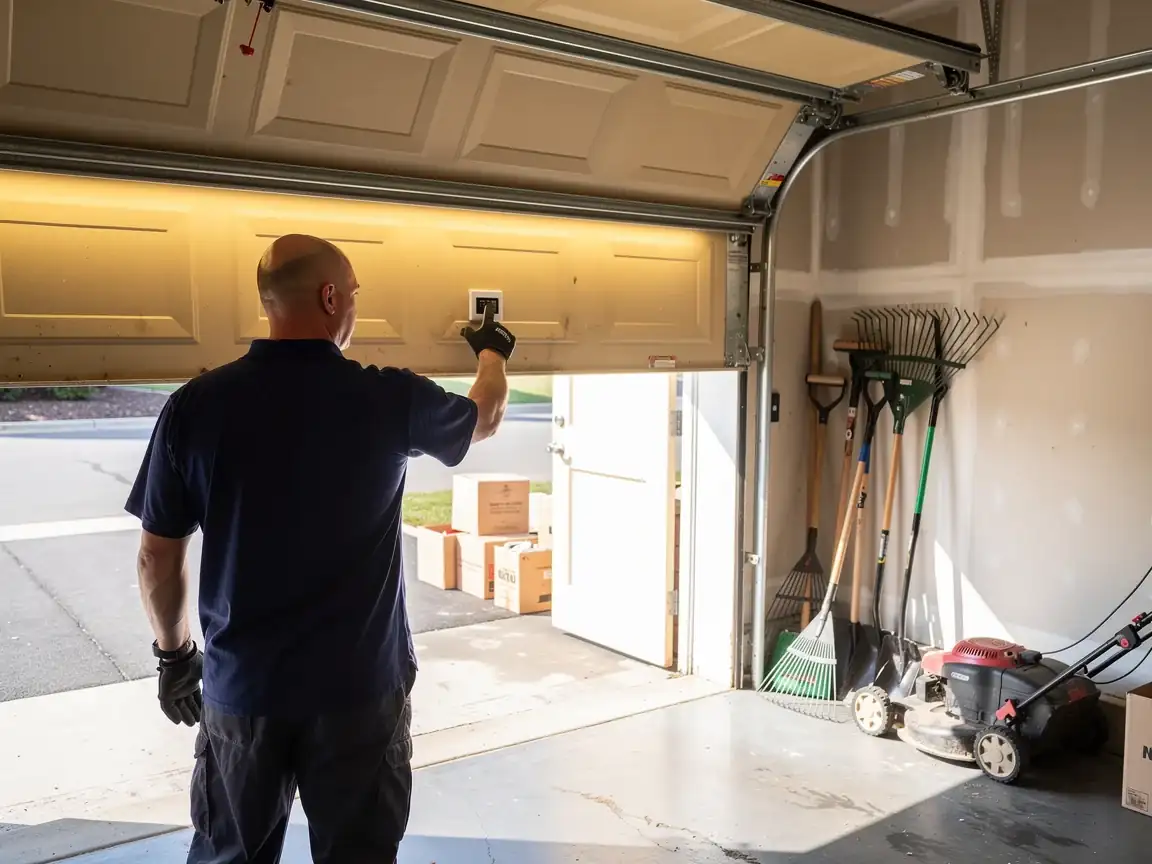
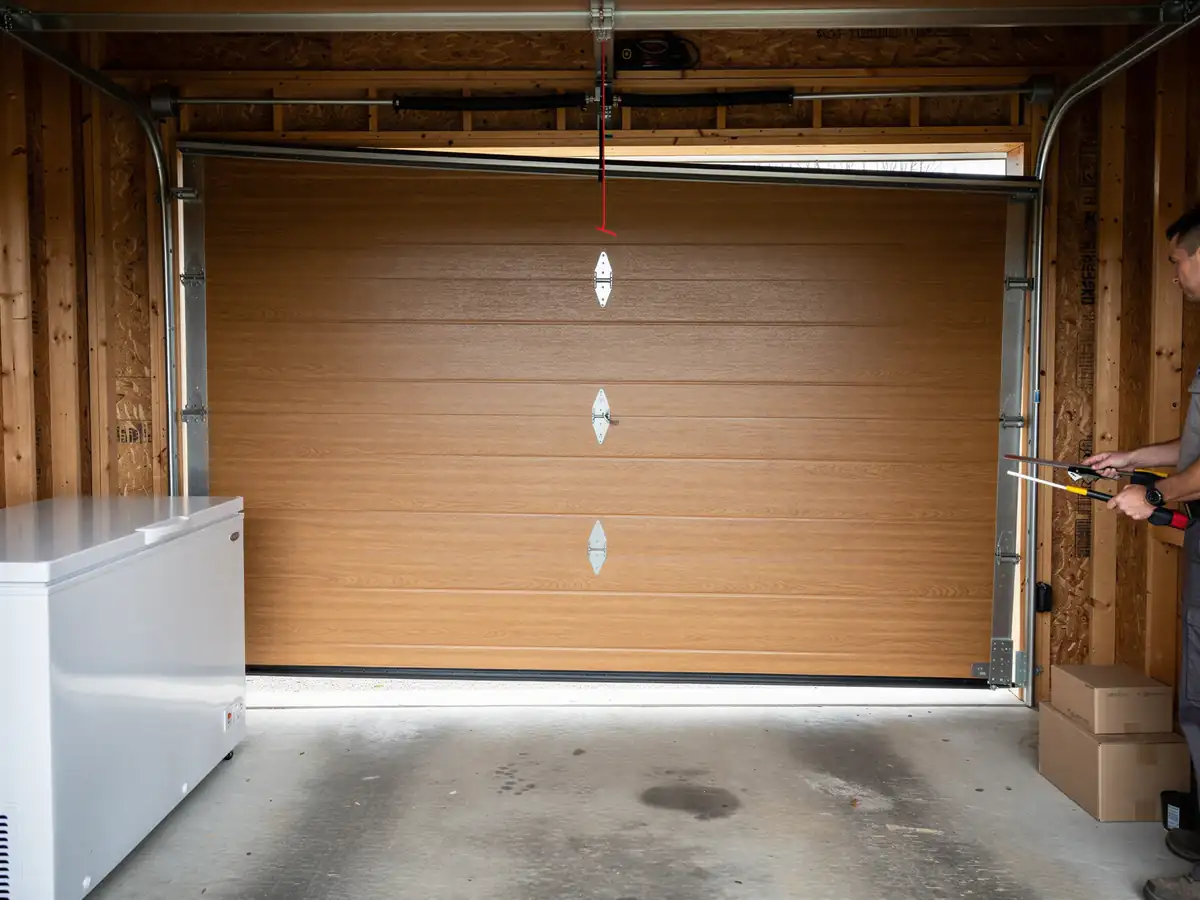
If the noise comes with the door hesitating, reversing, or binding partway through its travel, don't keep cycling it to see if it clears. That's load on a spring or cable that's already failing, and running it anyway is how a minor repair turns into a trip to buy a whole new section of track.
The Problem
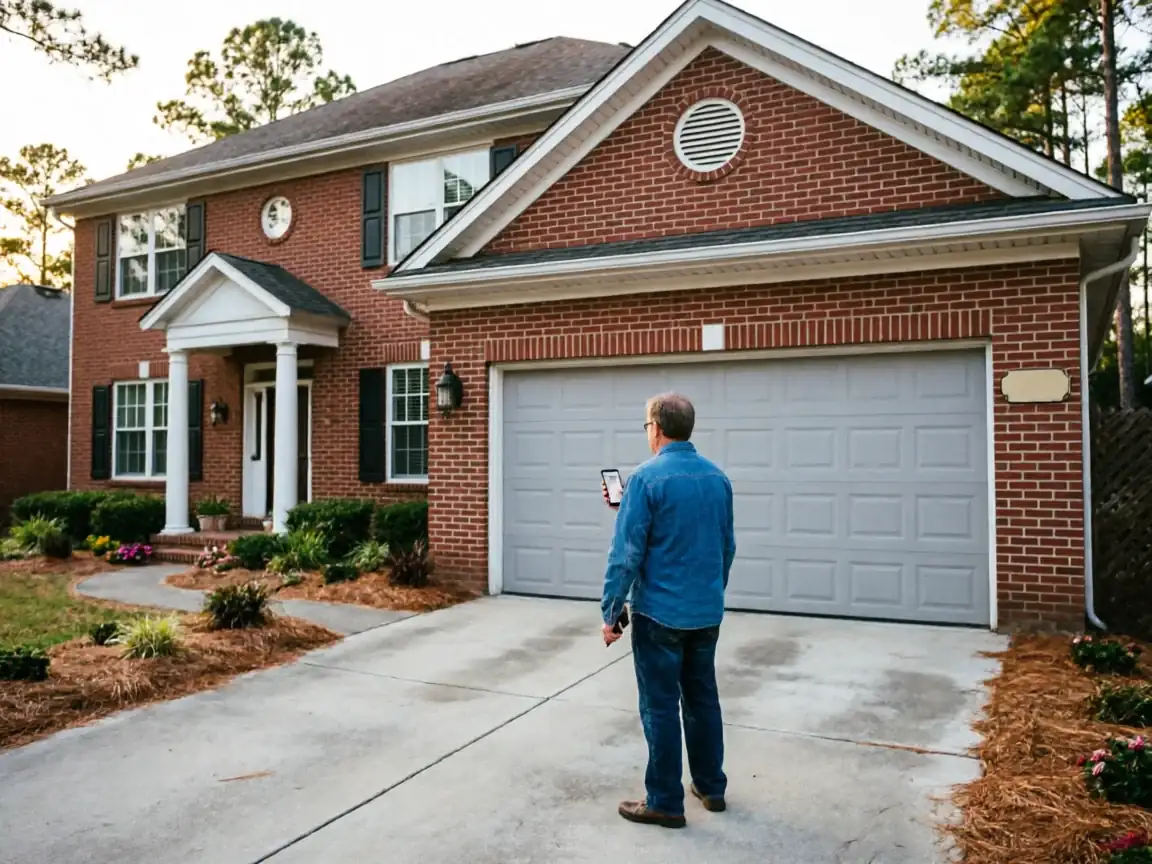
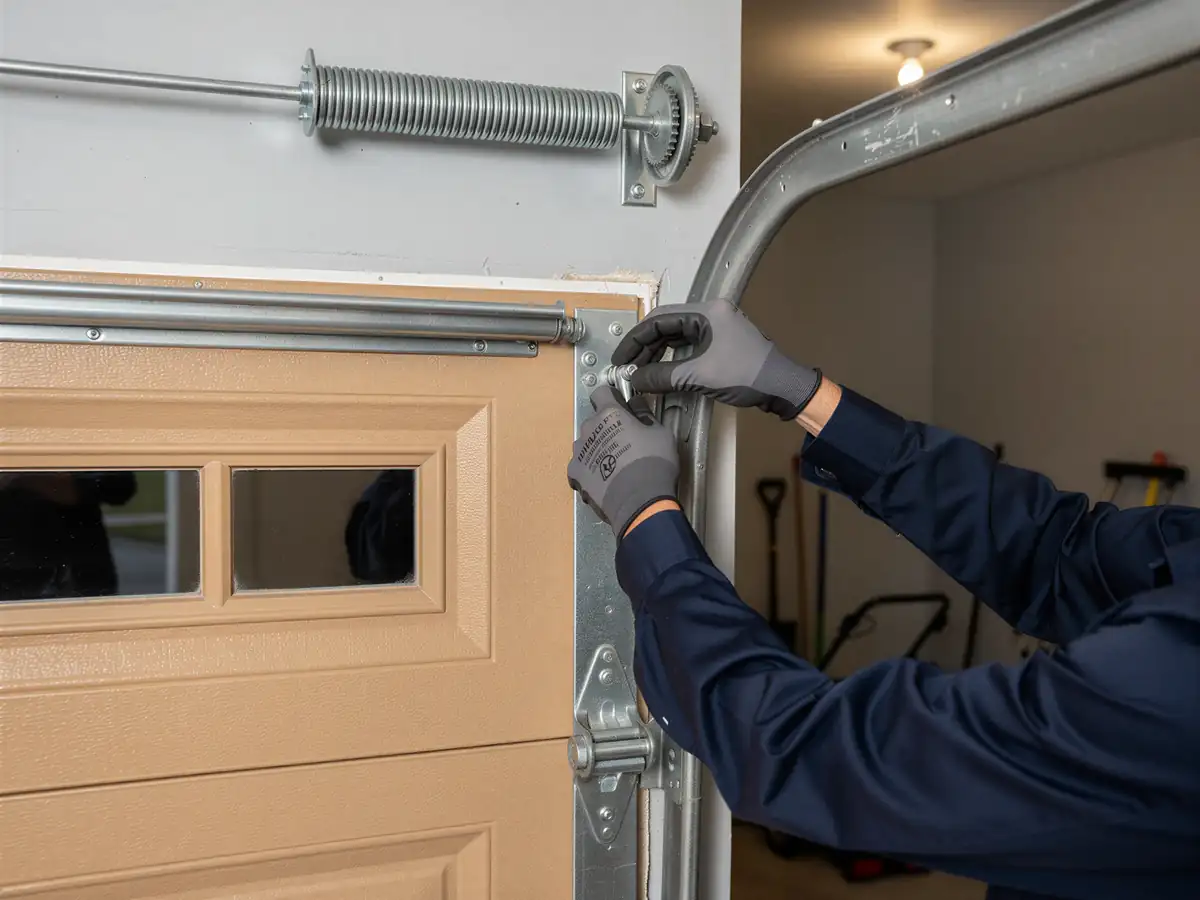
Garage doors are mechanical, and every noise has a cause - the trouble is homeowners often treat them all the same way: ignore until it stops working. On a house built in the 1960s or 70s, which describes most of the stock across this part of Norcross, the parts behind the wall have usually never been replaced. Original torsion springs, original rollers, sometimes the original opener motor. Thirty, forty, fifty years of lifting and lowering a few hundred pounds of door wears all of that down at different rates, which is why the noise rarely shows up all at once - it's one bad roller first, then a dry hinge, then the spring finally going.
The honest limit here: a noise diagnosis over the phone is a guess. We can tell you what a sound usually means, but we can't tell you for certain without seeing the door, because the same grinding sound can be a bent track, a bad roller, or an opener gear slipping, and those are three different jobs. If your door is making noise and you want a real answer instead of a guess, that's what the visit is for.
How Local Conditions Play In
Norcross sits in a cold-moderate climate band, not the deep freeze further north
But enough temperature swing through the year to matter for steel hardware. Metal track, springs, and panel skins expand in summer heat and contract when a cold front comes through in winter. Fasteners that were torqued down on a 90-degree day in July can work loose by February, and that's often where a new rattle or a track that's slightly out of alignment comes from - it wasn't installed wrong, it just moved with the season.
This matters more on older doors because the tolerances were looser to begin with
A door installed when the house was built in the 1960s or 70s didn't have the tighter manufacturing standards of a door built in the last fifteen years, so there's more room for a part to shift before it starts making noise you can hear from inside the house. On newer builds in the same neighborhoods - anything from the 1990s or 2000s - the hardware is tighter and the noise usually shows up later and means something more specific, like a bearing rather than general looseness.
Humidity swings through the warmer months can also make wood-trim doors swell slightly
Which shows up as a new scrape or drag sound on doors that were silent all winter.
What It Costs
We're not going to put a number here that isn't accurate for your door, because the range between a dry-hinge squeak and a broken torsion spring on a double door is wide, and quoting one figure for both would be a lie by omission. What we can tell you is what drives the number: whether it's a part replacement or an adjustment, whether the door is a single or double, and whether the hardware is original equipment that needs matching or something more standard we can source off the truck.
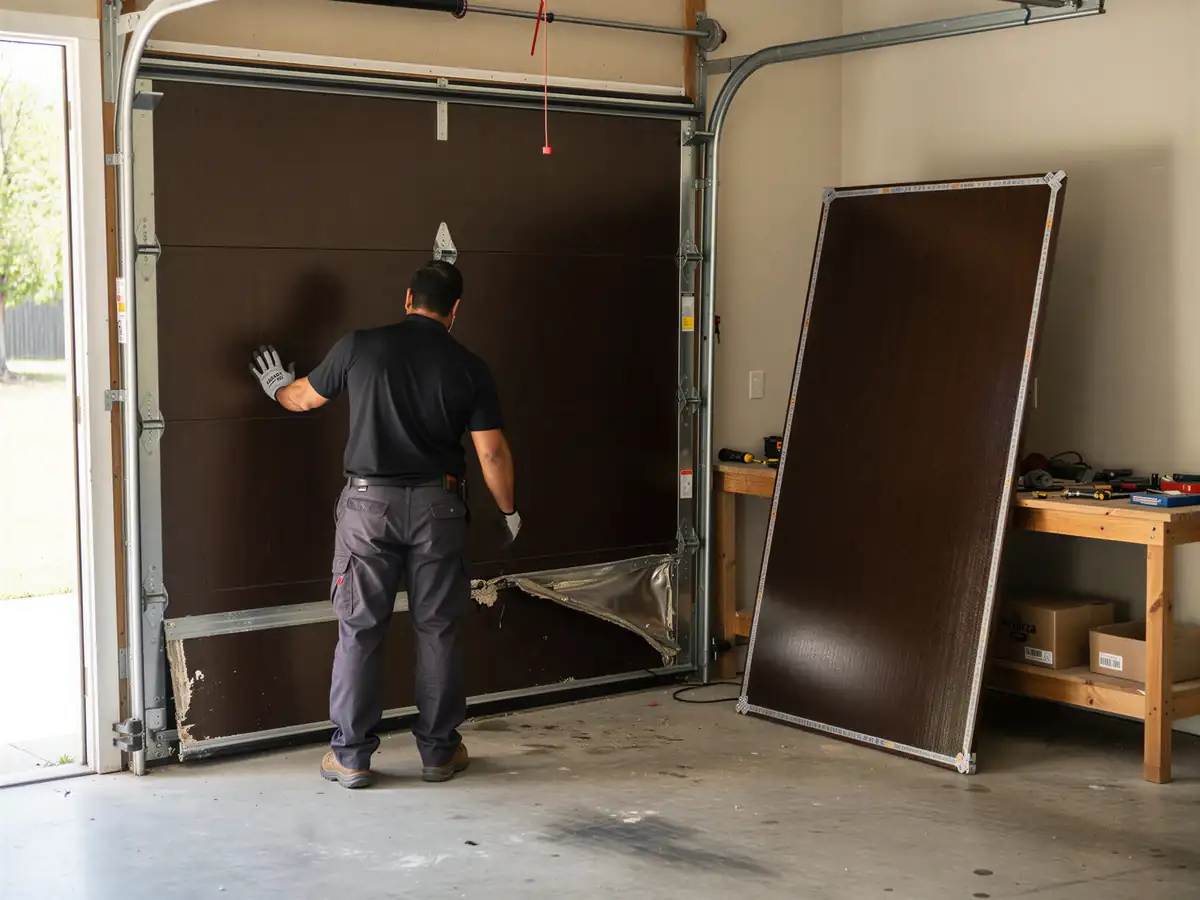
Across the households we work with in this area - a mix of owner-occupied homes built mostly in the 1960s and 70s - the most common jobs are spring replacement, roller sets, and track realignment, roughly in that order. None of those are exotic repairs, but on an older door the parts aren't always a same-day match, and that's the one real limitation worth naming: if your hardware is original to a house built decades ago, finding an exact replacement spring or track bracket sometimes takes an extra day. We'll tell you up front if that's the case rather than guess.