Why It Happens Here
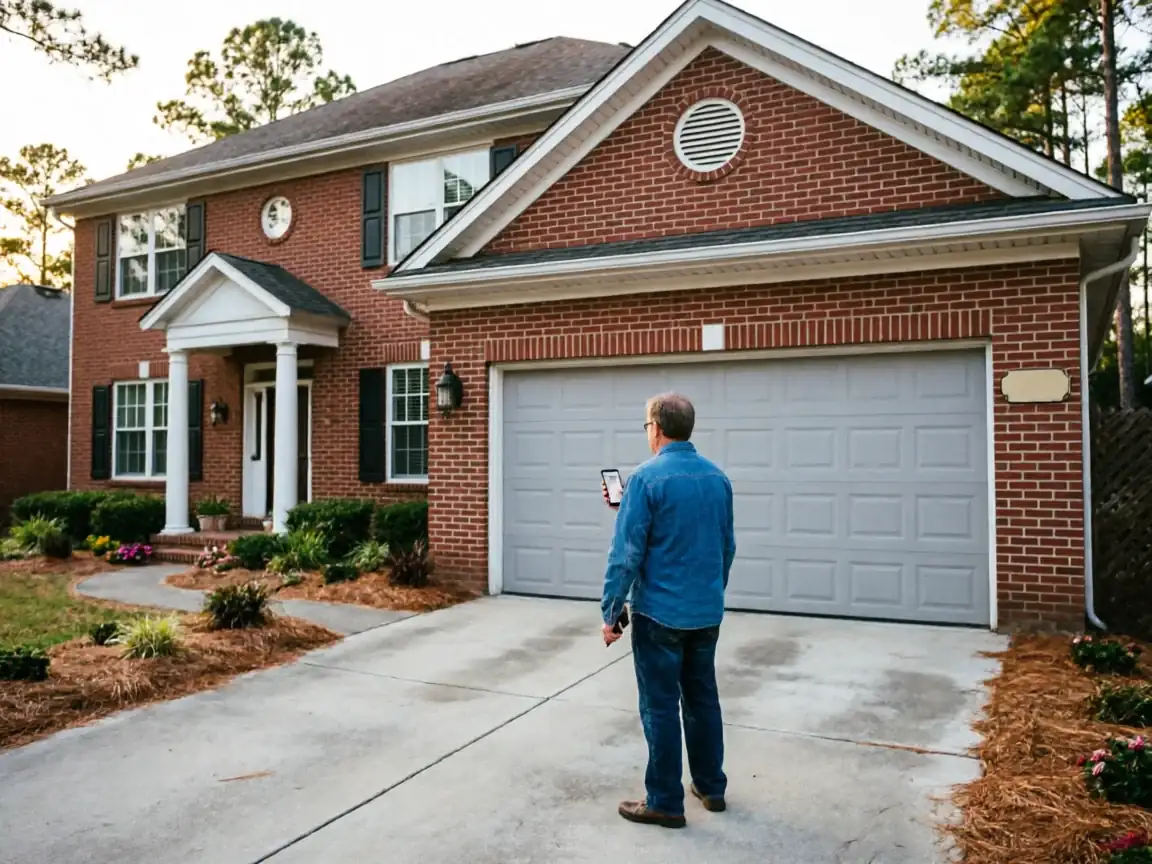
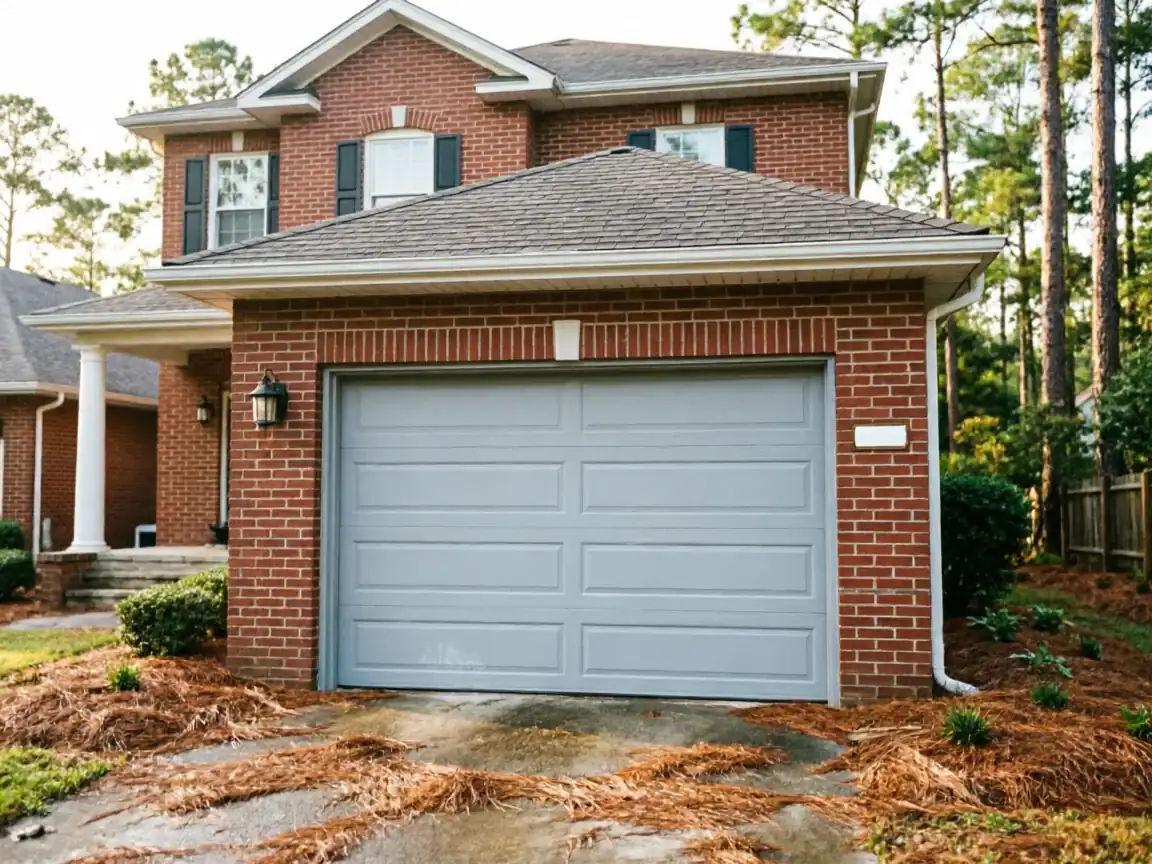
Druid Hills' housing mostly dates to 1964, a good 13 years ahead of the 1977 median build year across the wider Norcross service area, where most stock runs 1960s-70s. That matters for maintenance because a door installed when these houses were new has had more decades of expansion and contraction to work through than a typical area door. Track brackets loosen a hair at a time. Hinges wear oval instead of round. None of it looks dramatic on a quick glance, which is exactly why it gets missed.
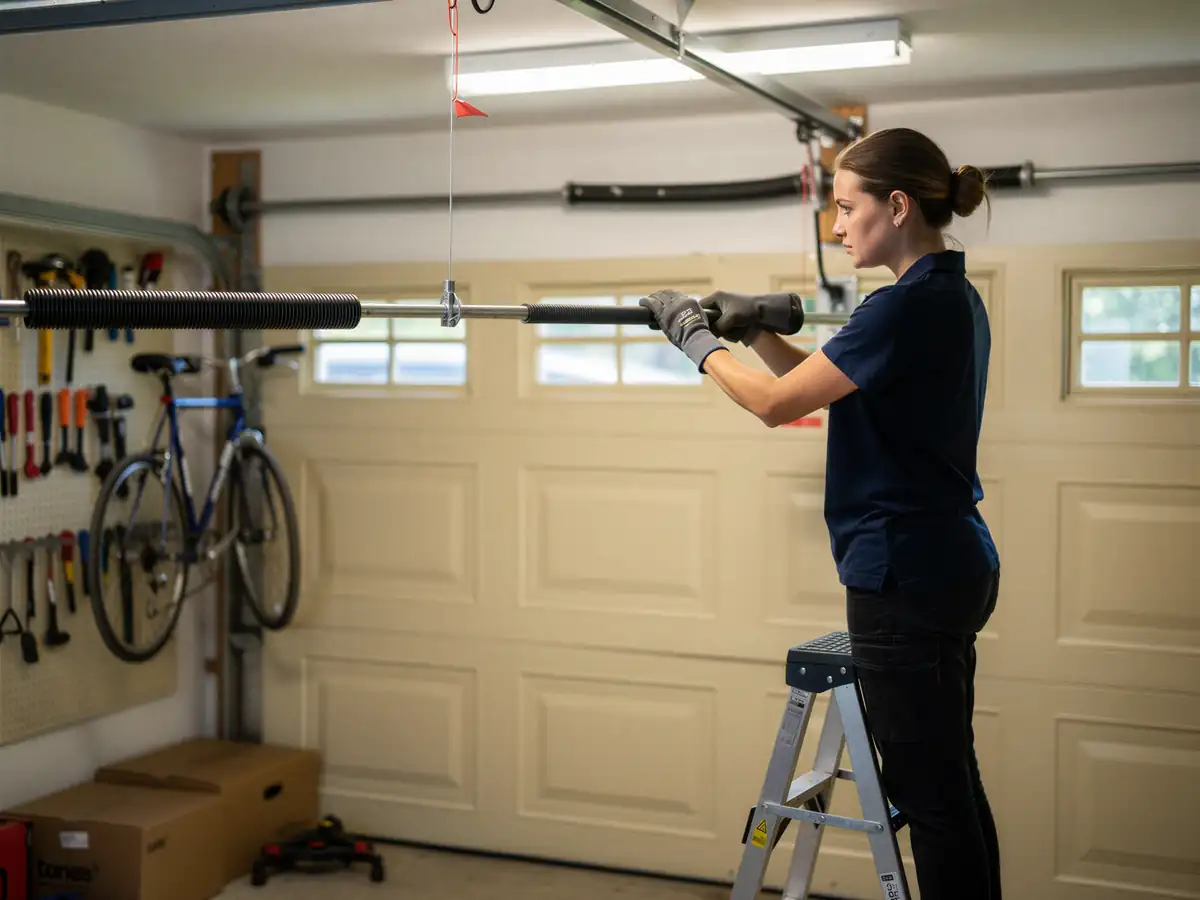
The area sits in a cold-moderate climate band, so hardware here deals with seasonal swings rather than constant heat or constant damp. Steel contracts in cold snaps and that's when a track that's already a little out of alignment starts binding or popping a roller. A maintenance visit on a house this age is less about the opener and more about catching what sixty years of seasonal movement has done to the parts around it. For a broader look at what we check on a maintenance visit, see our Druid Hills service page.
What Can Go Wrong
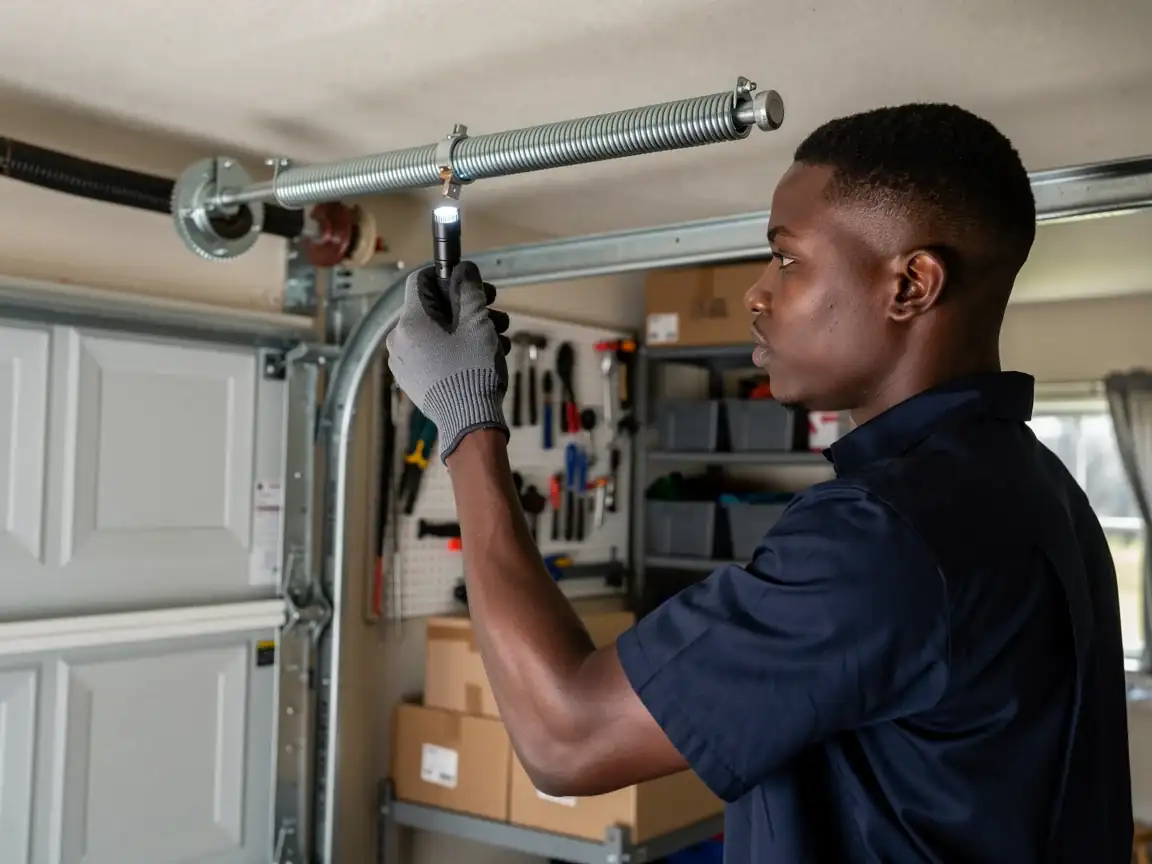
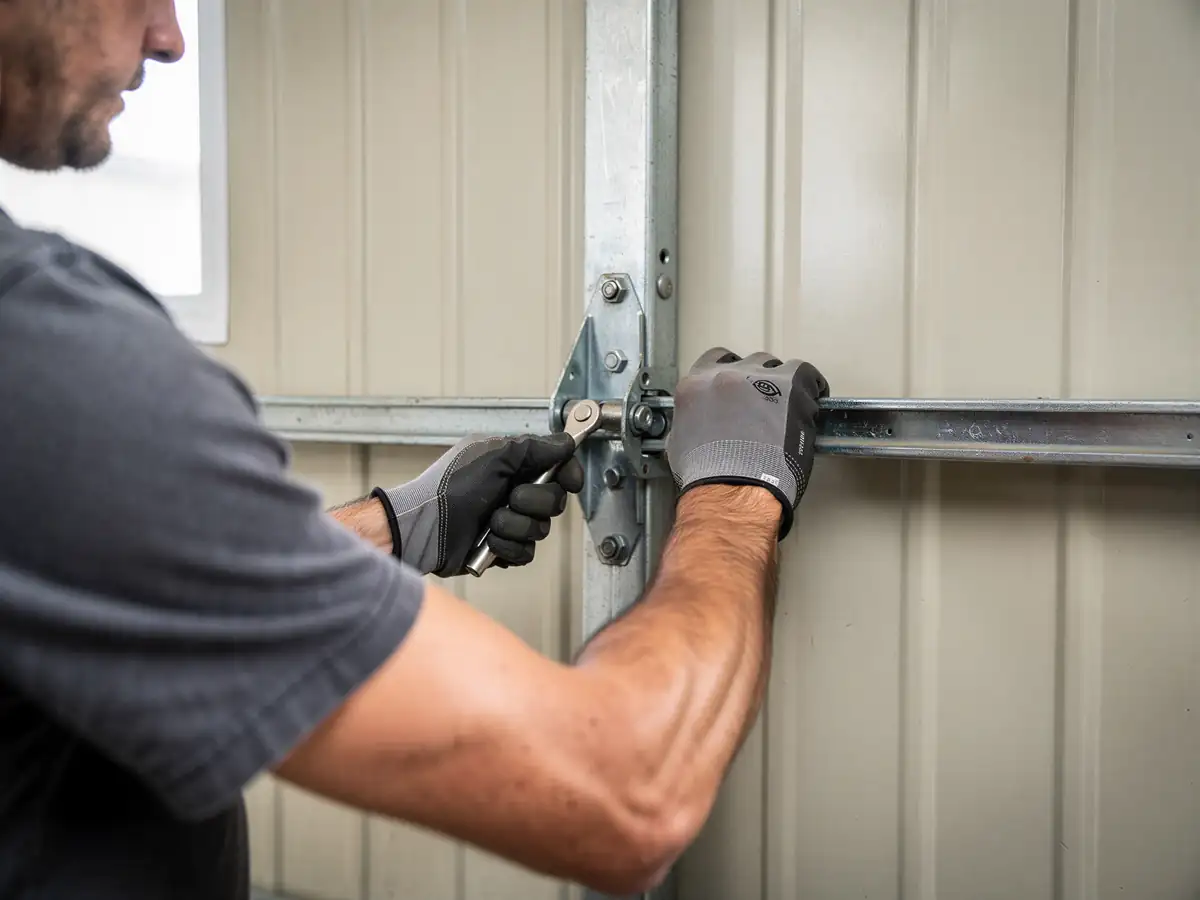
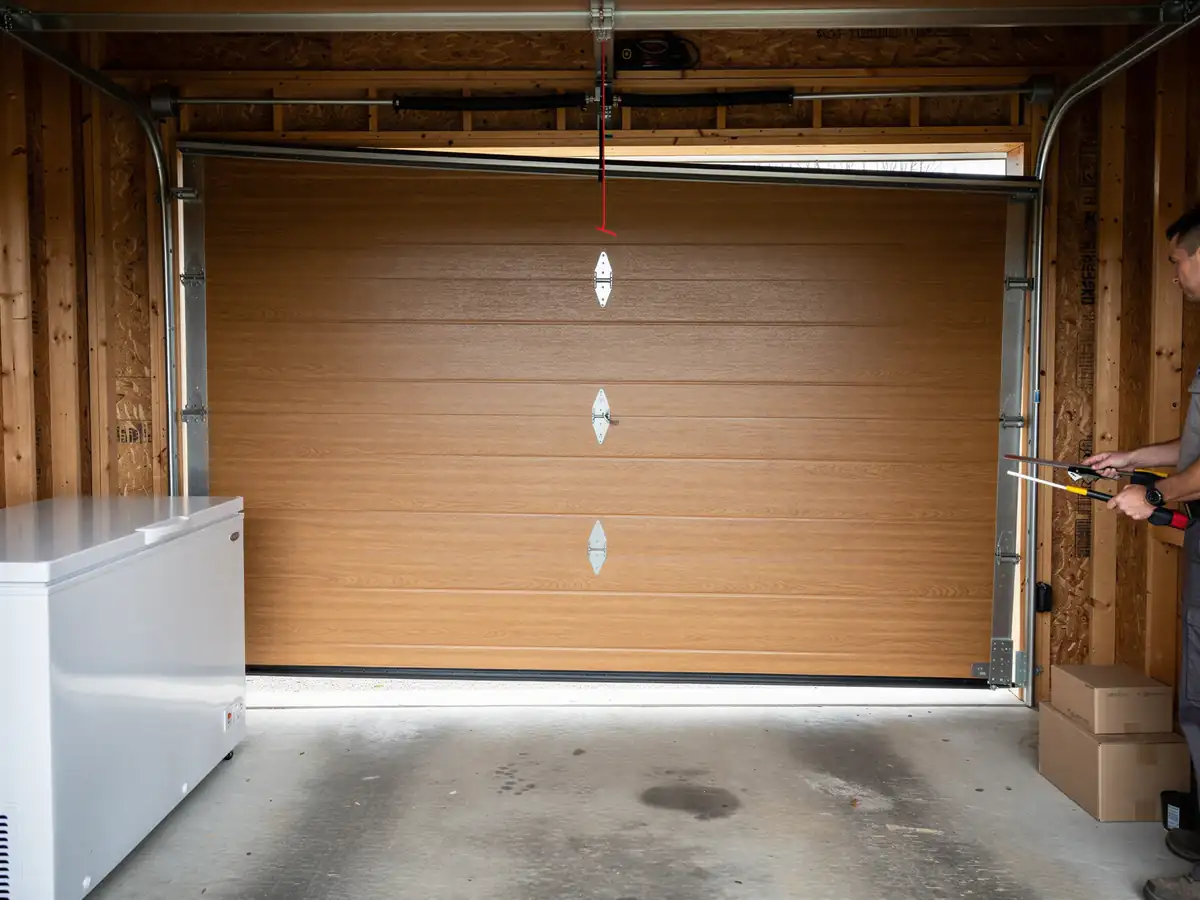
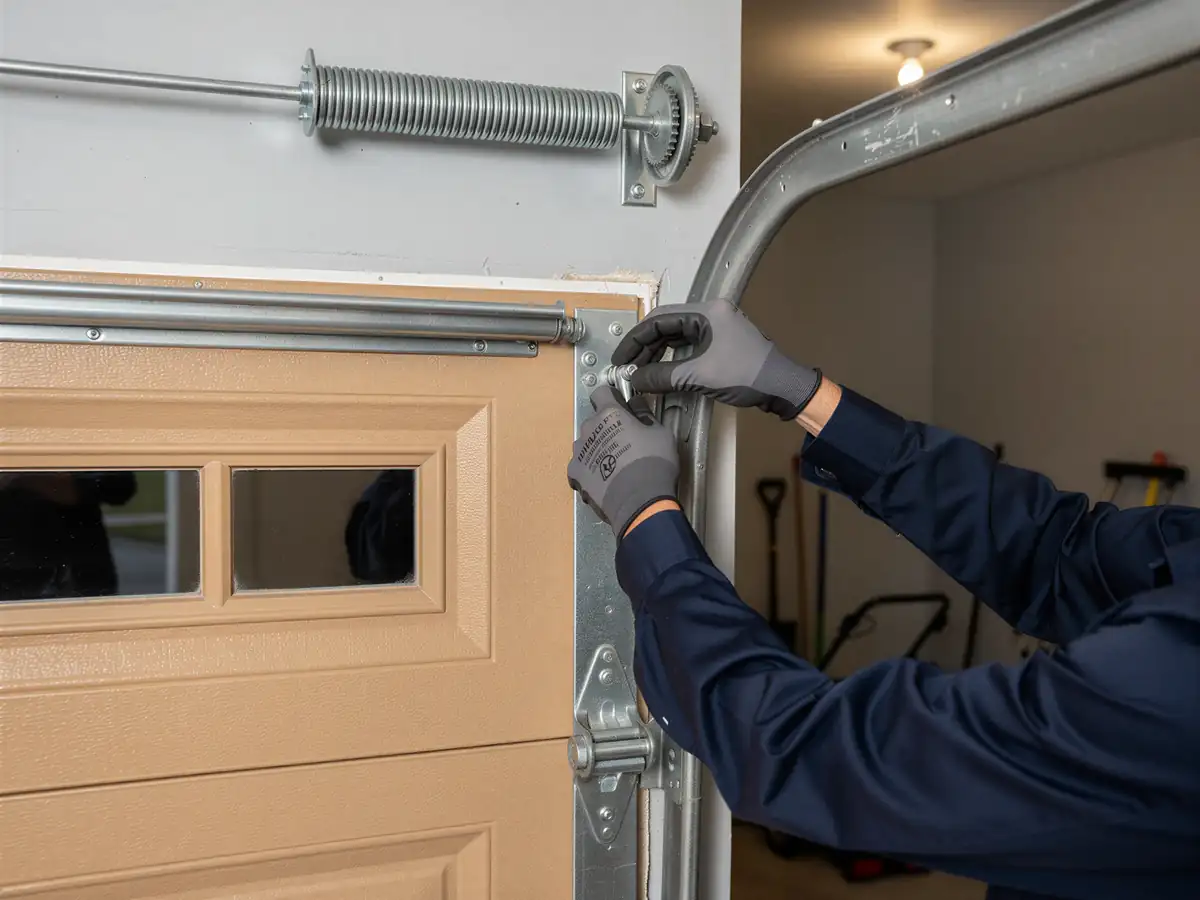
On houses built in the early-to-mid 1960s, the most common finds during a maintenance check are worn rollers, rusted or pitted track sections, and torsion or extension springs that are well past a reasonable service life even if they haven't snapped yet. Fasteners that held tight for decades start to work loose, especially where the track bolts into framing that's also sixty years old and has its own settling to account for.
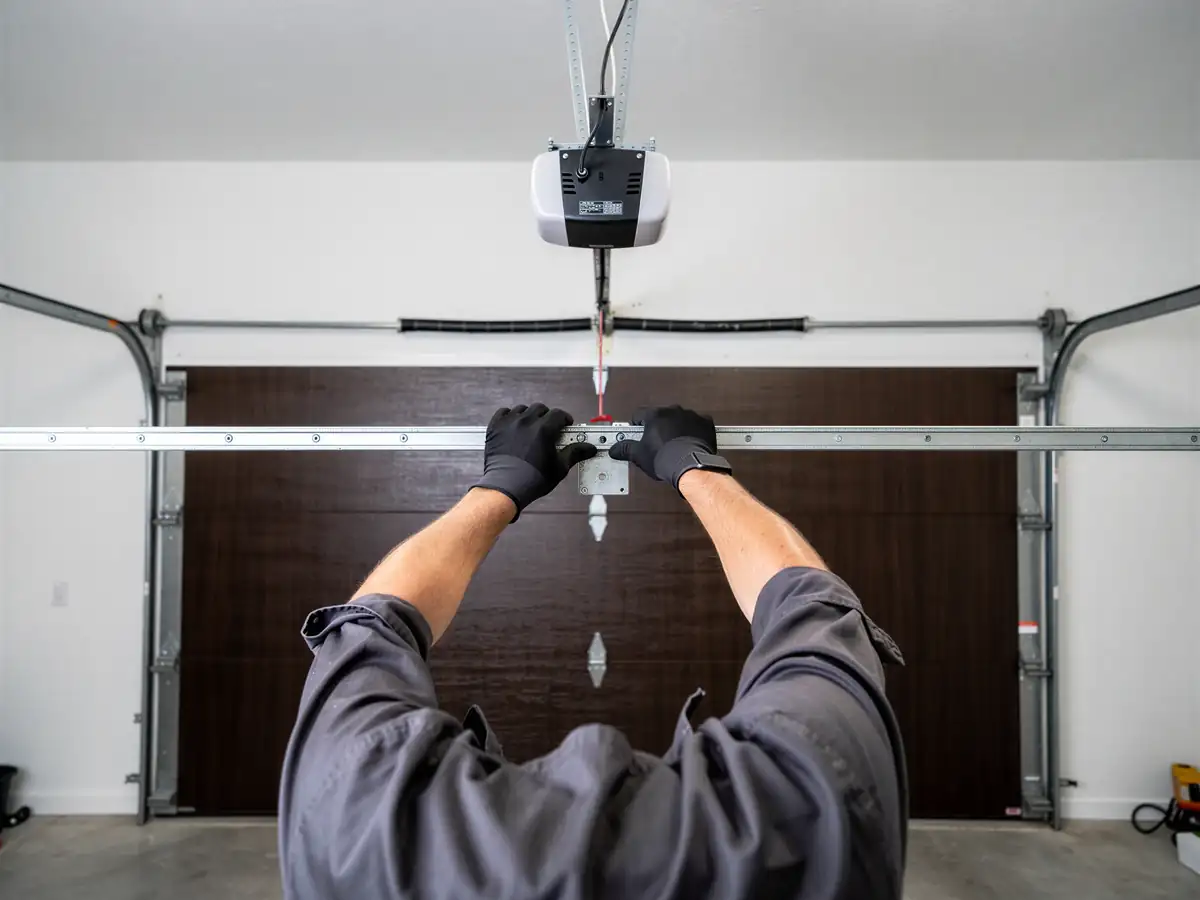
Openers themselves are rarely original - most get replaced at least once over that span - but the mounting hardware and the drive track they hang from often are. That mismatch, a newer motor on older rail, is something we flag during a check because it's an easy source of noise and uneven travel that homeowners usually blame on the opener itself. We won't replace a spring that's holding fine just because of its age; we'll tell you what we're seeing and let you decide.
How Long You Are Without the Door
We run maintenance visits to Druid Hills out of Norcross, about 13 miles away
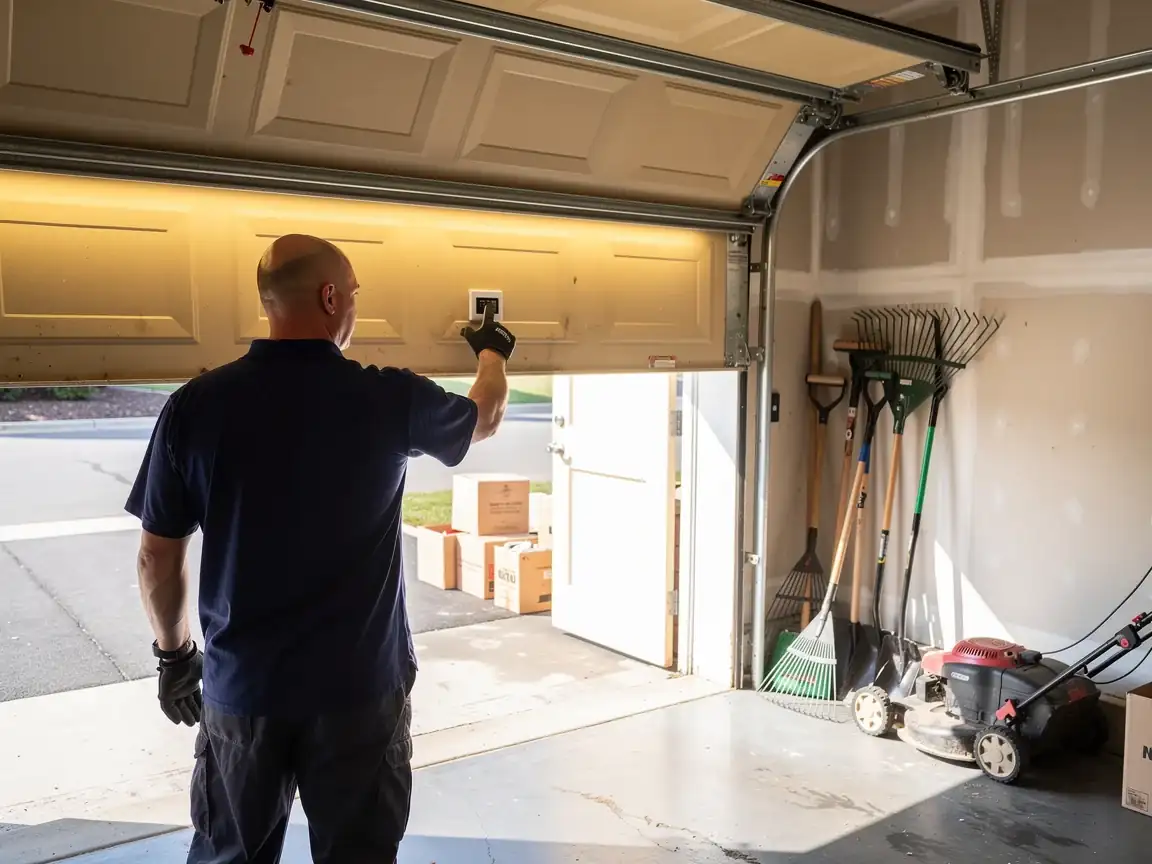
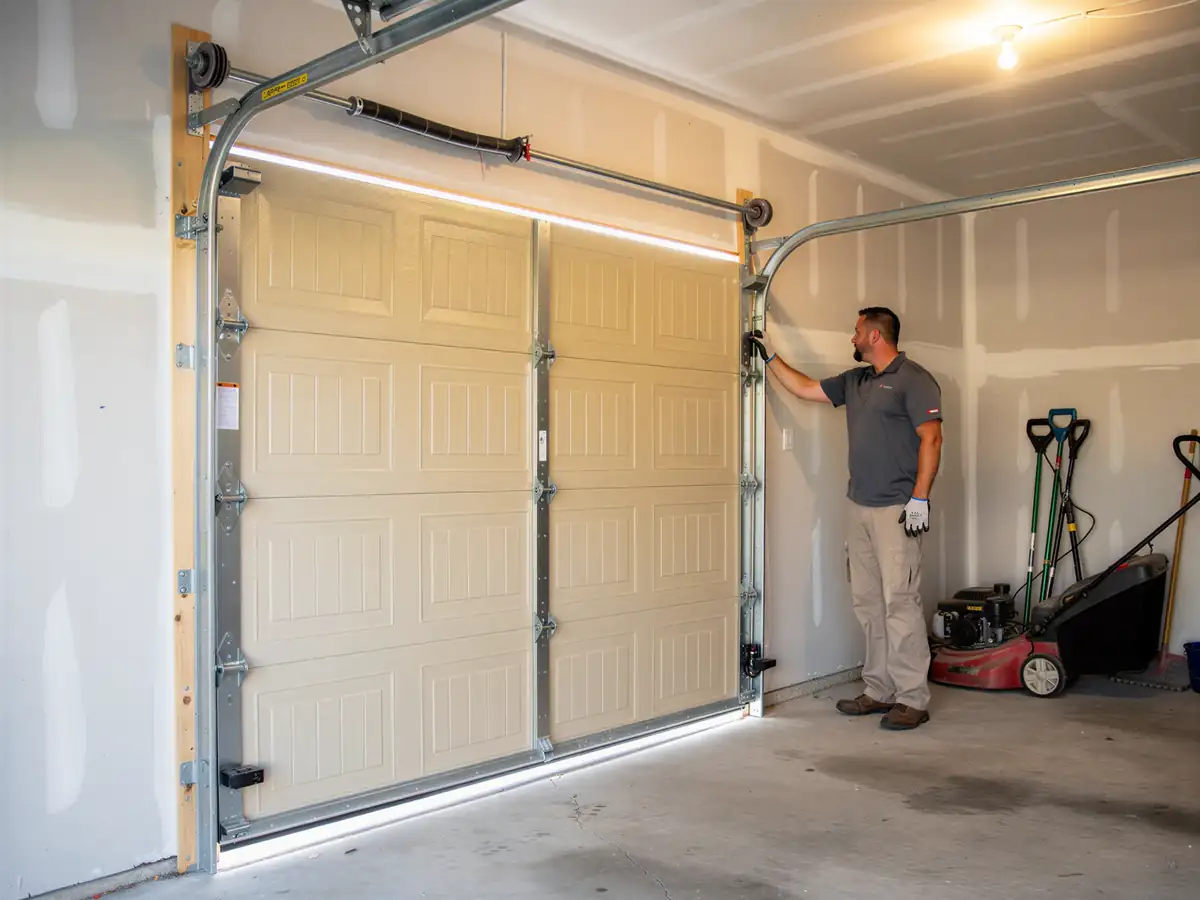
That distance means a maintenance appointment here gets scheduled in advance rather than fit in as a same-day stop, so plan on booking ahead rather than calling and expecting someone within the hour. Once a tech is on site, a standard maintenance check doesn't take the door out of service - springs get inspected and lubricated, track gets checked for alignment, and the door stays usable the whole time unless something is found that needs immediate attention.
- 13 miles
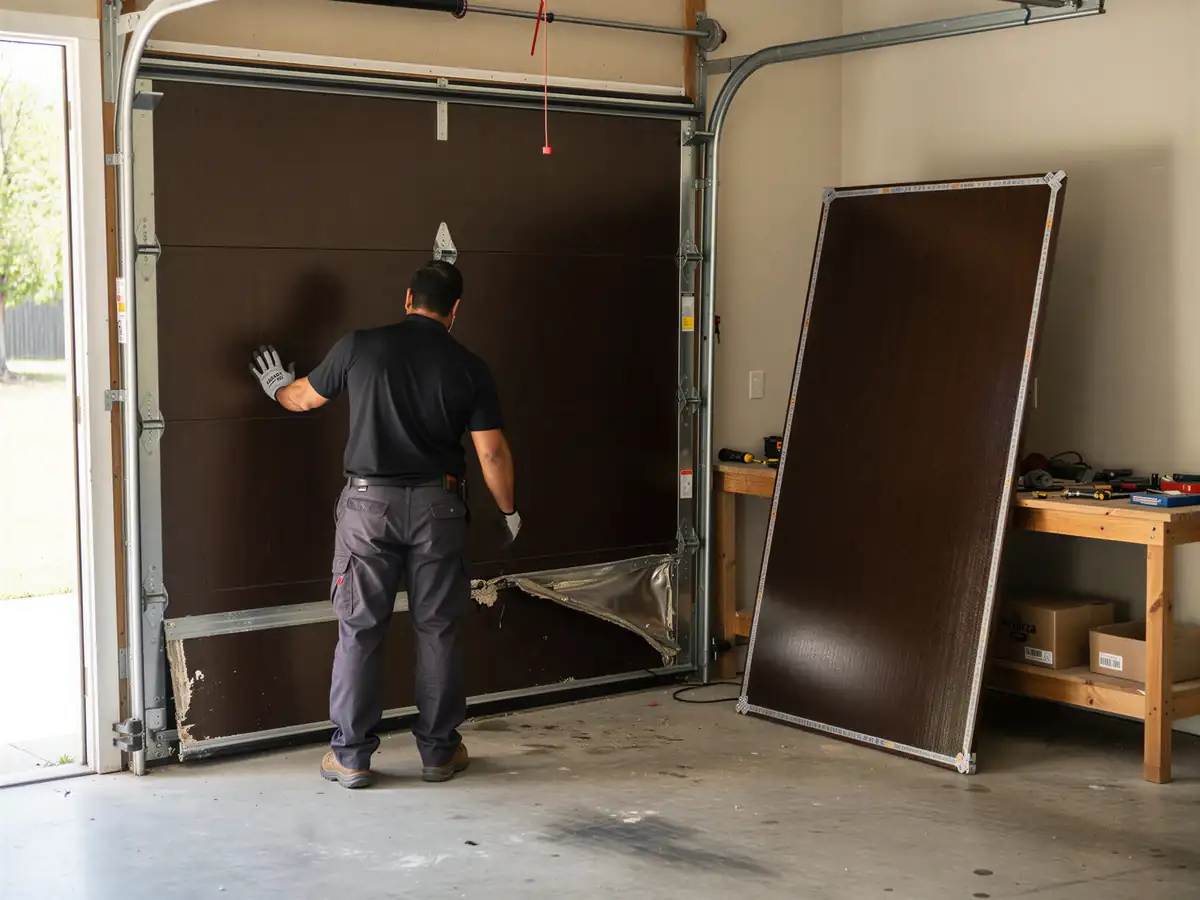
If a check turns up a spring or cable that's genuinely close to failing
We'll say so on the spot rather than waiting for a second visit. That's the one case where the door might sit unused for part of the day while the part gets swapped, and it's worth knowing that going in rather than being surprised by it.
What It Costs
We're not going to list a number here that isn't backed by a real quote for your door, so we won't guess at one. What we can tell you is that median household income in Druid Hills runs $140,466, nearly double the $73,075 median across the rest of the Norcross service area, and homeowners here more often ask for the preventive visit rather than waiting for a failure call. That's a choice about protecting a door and opener that's already been running for decades, not a reflection of what any one repair runs.
Maintenance pricing depends on what's found - a visit that's just inspection and lubrication costs less than one where a roller set or a cable needs swapping out. Ask for the breakdown when you book so there's no surprise on the invoice. Details on scope and what's included in a standard visit are on our maintenance page.
The Symptom
The complaint we hear most from Druid Hills is a door that's gotten noisy or that hesitates partway through its travel, usually described as grinding or shuddering around the same spot every time. On a house from this era, that's almost always a track or roller issue rather than the opener, and it tracks with the age of the original hardware - sixty years of use will do that even to well-built steel.
A door that drifts to one side as it closes, rather than coming down square, is the other common one, and it usually points to a spring that's lost tension unevenly on a double door, or a cable that's stretched more on one side. Either symptom is worth a maintenance check before it turns into a stuck door or a cable that lets go entirely.