
The DIY Question
A lot of Norcross homeowners call us after they've already tried something - lubing a track, tightening a bracket, watching a video on spring tension. Some of that is fine. Lubricating rollers and hinges with a silicone-based spray twice a year is a job you can do yourself safely, and it actually helps in our cold band winters when metal contracts and grease stiffens.
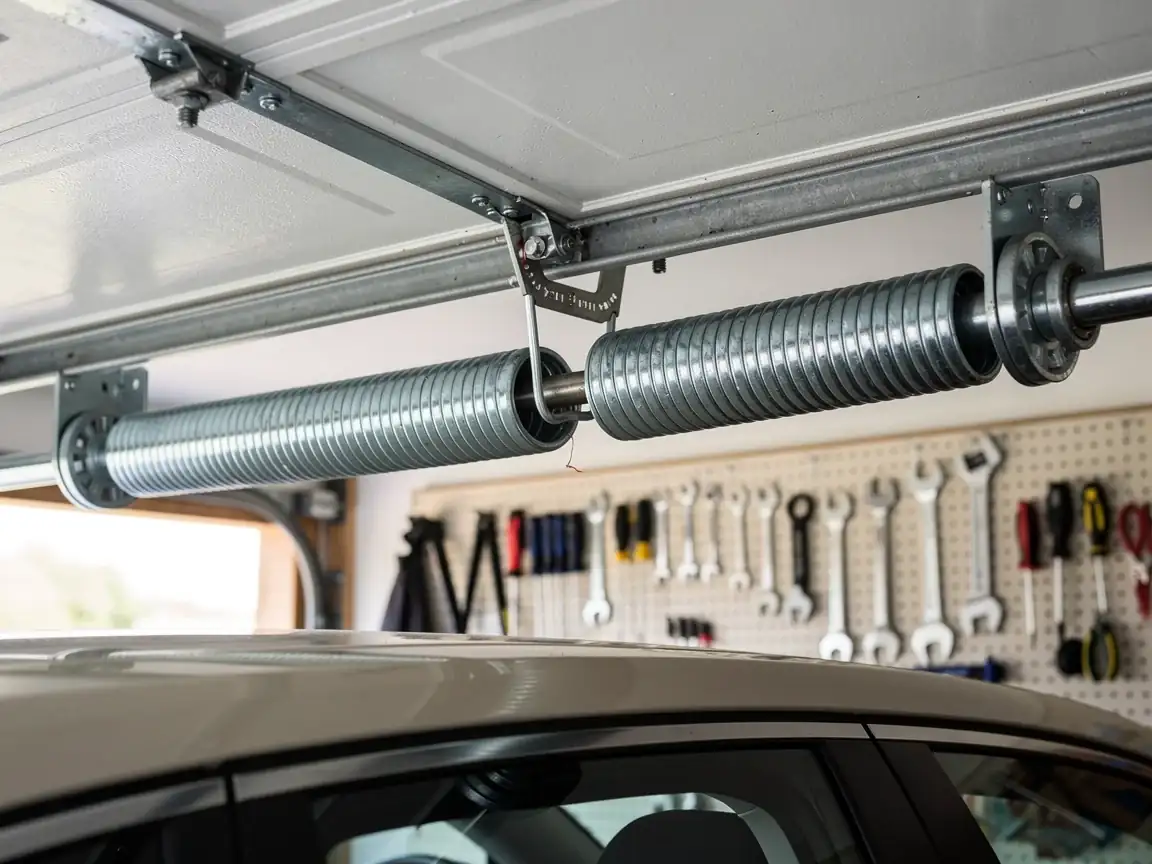
What you shouldn't touch is anything under spring tension. A torsion spring on a double door is wound tight enough to break a wrist or worse, and houses in this area built between 1951 and 2012 - with most of the stock dating to the 1960s and 70s - often still run original or first-replacement torsion hardware that's past its rated cycle count. If a cable is frayed, a spring is visibly gapped, or the door is off-track, that's a call, not a weekend project.
We'll also tell you honestly when a repair isn't worth doing. If the opener, springs, and track are all near end of life on a door that old, patching one part just means you're back on the phone in six months. Sometimes replacement is the cheaper fix over three years, even if the invoice is bigger today.
Why It Happens Here
Norcross sits in a cold-moderate climate band, which means freeze-thaw swings rather than deep sustained cold - and that's actually harder on garage door hardware than steady cold. Metal springs and tracks contract overnight and expand through the day, and over a few winters that cycling works bolts loose and dries out factory lubricant faster than a mild climate would.
Pair that with the housing stock: across the 18 named areas we cover, most homes went up in the 1960s and 70s, with the broader range running 1951 to 2012. A door installed in a 1968 build has had five decades of this freeze-thaw cycling, and a lot of those garages still have the original torsion spring or a replacement installed 20 years ago that's also due. That's a different failure pattern than you'd see in a subdivision built in 2015 - newer doors fail from installer shortcuts or cheap openers, older ones fail from fatigue.
We see this pattern consistently in Berkeley Lake, three miles from Norcross, and across toward Doraville four miles out - both sides of the service area share the same mid-century build era and the same winter cycling.
The Symptom
The classic call sounds like this
The door worked fine all fall, then one cold morning the opener strains, groans, and either stalls halfway or slams down faster than normal. That's a spring losing tension, and it's the single most common service call we get once temperatures start swinging in this area.
A second version: the door runs rough on one side, like it's catching, and you hear a popping sound from the track
That's usually a roller or hinge that dried out over the cold months and is grinding against a worn spot in the track - track wear that's more common on the older 1960s and 70s builds than on anything newer.
If your opener is cycling the motor but the door barely moves, don't keep hitting the button
Repeated attempts on a dying spring can snap a cable or bend a panel, and that turns a $200 spring job into a full section replacement.
Booking a Visit
We cover Norcross and the surrounding area out to about 20 miles - Berkeley Lake, Doraville, Mountain Park, Clarkston, Stone Mountain, Pine Lake, Scottdale, Avondale Estates, Druid Hills, Belvedere Park, Grayson, Panthersville, Lithonia, Gresham Park, Dacula, Cumming, and Fair Oaks, 18 named areas in all.
When you call, tell us the age of the house if you know it and what the door is doing - grinding, stalling, off-track, or just slow. That one detail usually tells us whether we're bringing a spring kit or a full roller and track set, which means less time standing in your driveway while we go back to the truck.
We don't do emergency glass or window work, just the door, opener, spring, track, and panel side of things. If that's what's wrong, get in touch.















