Booking a Visit
We run this job out of Norcross, about 13 miles from Belvedere Park, so we don't keep a depot or a drop-in counter in the neighborhood. What that means for you: we schedule the visit, bring the panel stock and hardware sized for a 1961-built door, and do the swap in one trip rather than making you wait on a second truck run for a part we didn't know we needed. Call ahead with the door's width and whether it's a single or double, and we'll have the right panel on the truck before we leave Norcross. We don't offer a same-day guarantee for this suburb - the drive alone makes that a promise we're not willing to make and then break on you.
If you're not sure yet whether a panel swap is even the right call versus a full door, that's a fair question to ask on the phone. A lot of houses in this part of the county still carry doors original to the build, and once you're replacing more than two panels on an old track, a full door often ends up cheaper than chasing discontinued stock piece by piece.
Stocked Parts
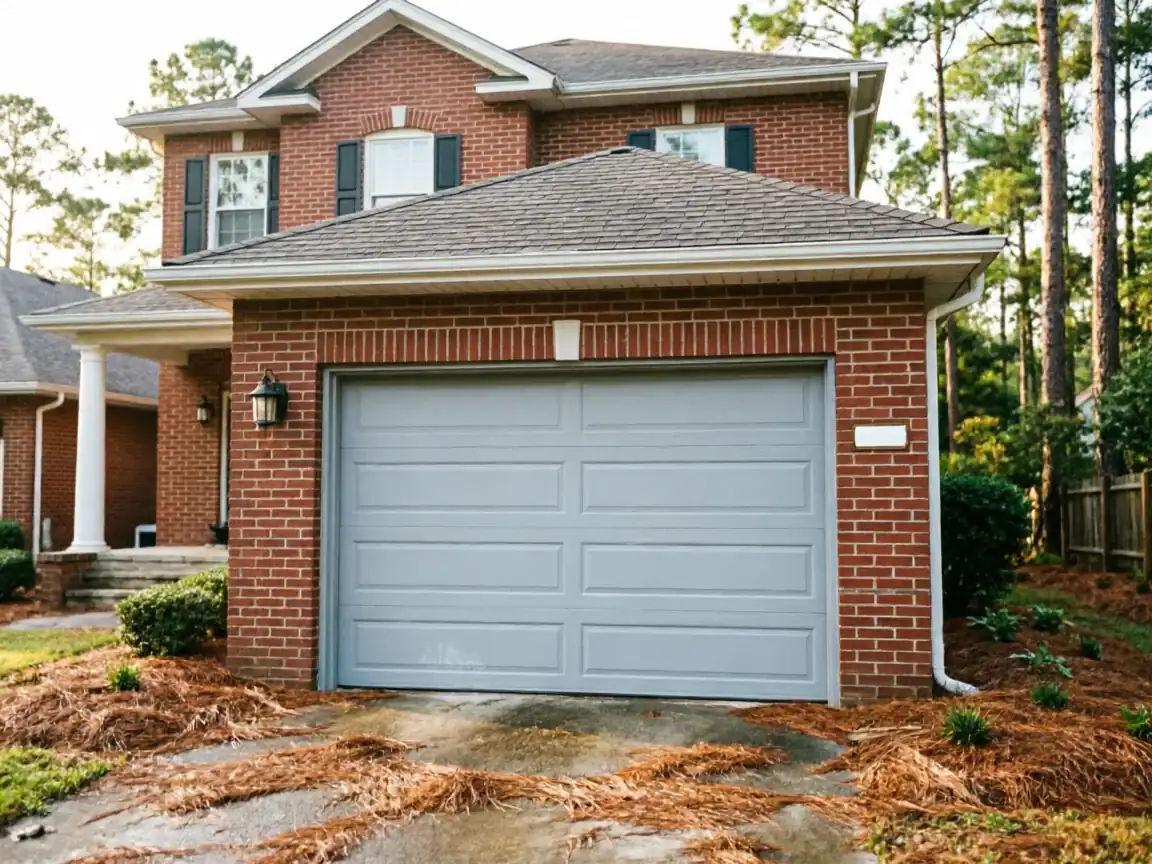
Houses in Belvedere Park went up mostly in 1961, which puts most garage doors here into the same era as the wider stretch of 1960s-70s stock across this service area. That means single-layer steel panels, narrower than what's sold new today, on hardware that was never upgraded because nothing broke hard enough to force it. We carry panel sizes that match that generation of door - not the thicker insulated panels standard on newer builds - because a mismatched panel on an old track will bind or hang wrong even if it technically fits the opening.
Where we run short is anything custom to a specific manufacturer's run from that decade - certain decorative inserts or a color match on an original finish. We'll tell you straight if a part needs ordering rather than promise we have it on the truck.
What the Repair Takes
On a door this age, the panel itself is rarely the only thing that's tired
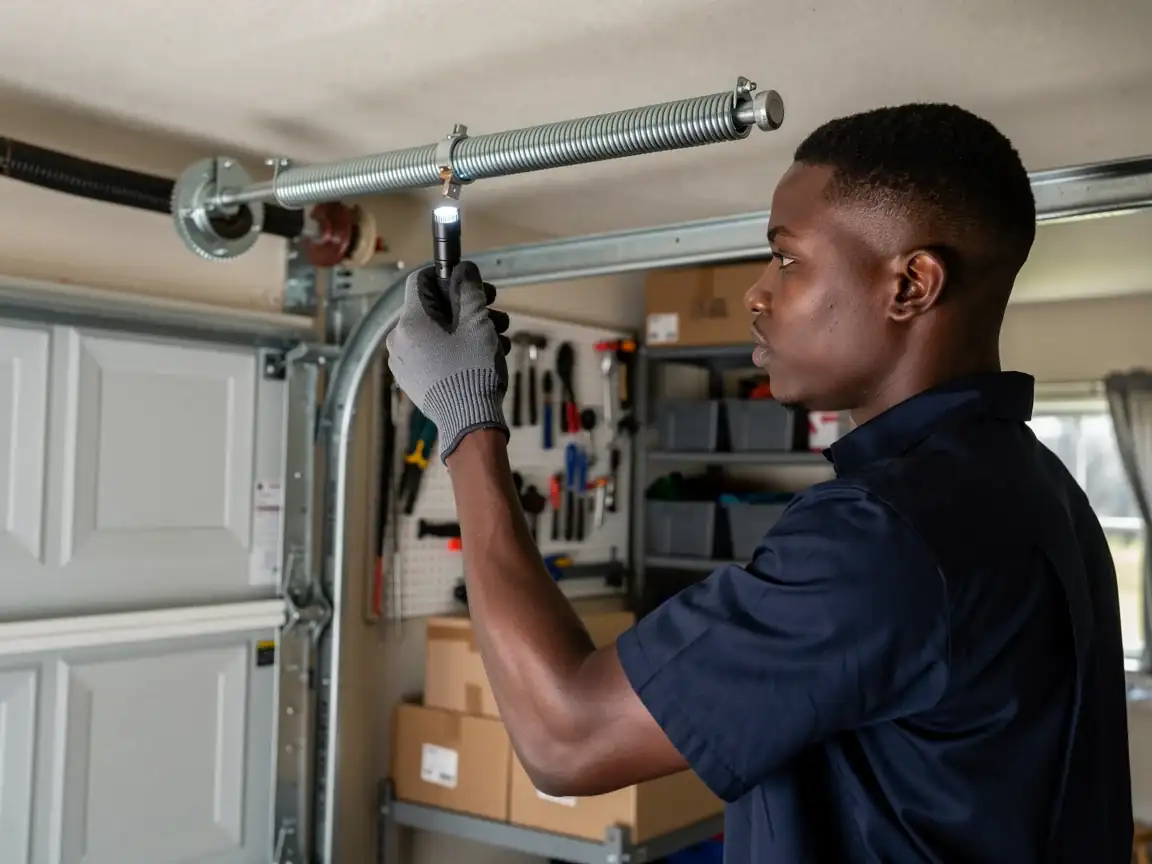
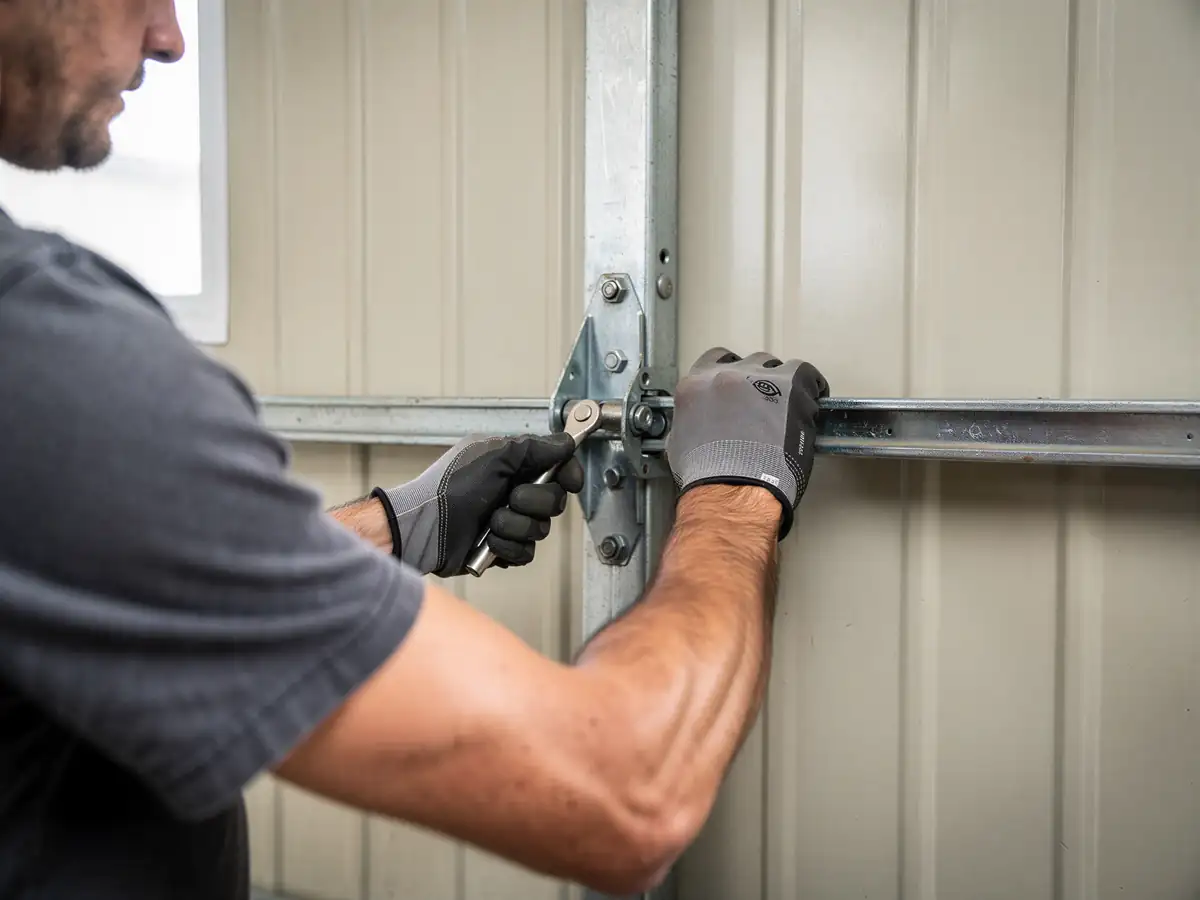
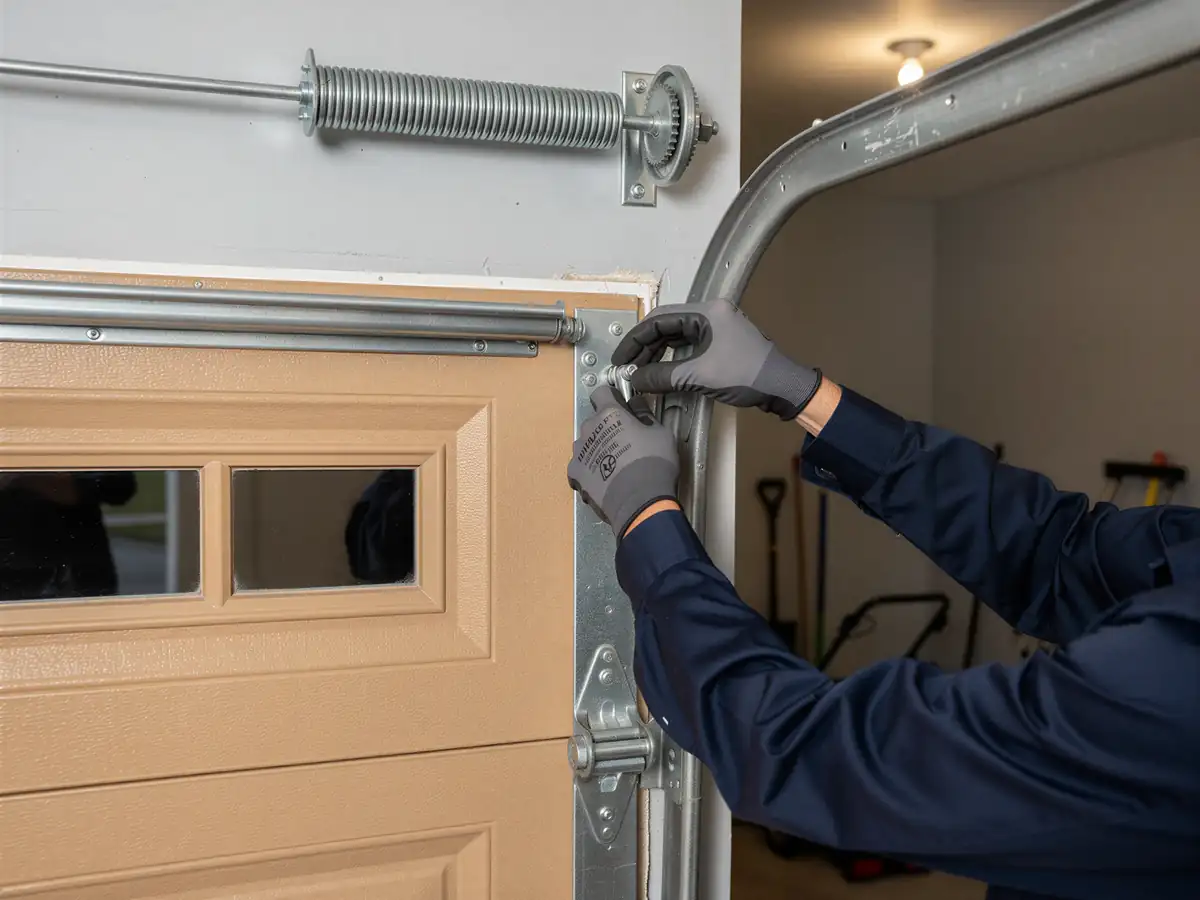
We pull the damaged section, check the end hardware and hinges it's bolted to, and look at whether the track those panels ride on has stayed true or bowed with age. If the hardware is original to 1961 and never replaced, we'll say so before we quote the job, because reusing brittle hinges on a new panel is how you end up back here in six months.
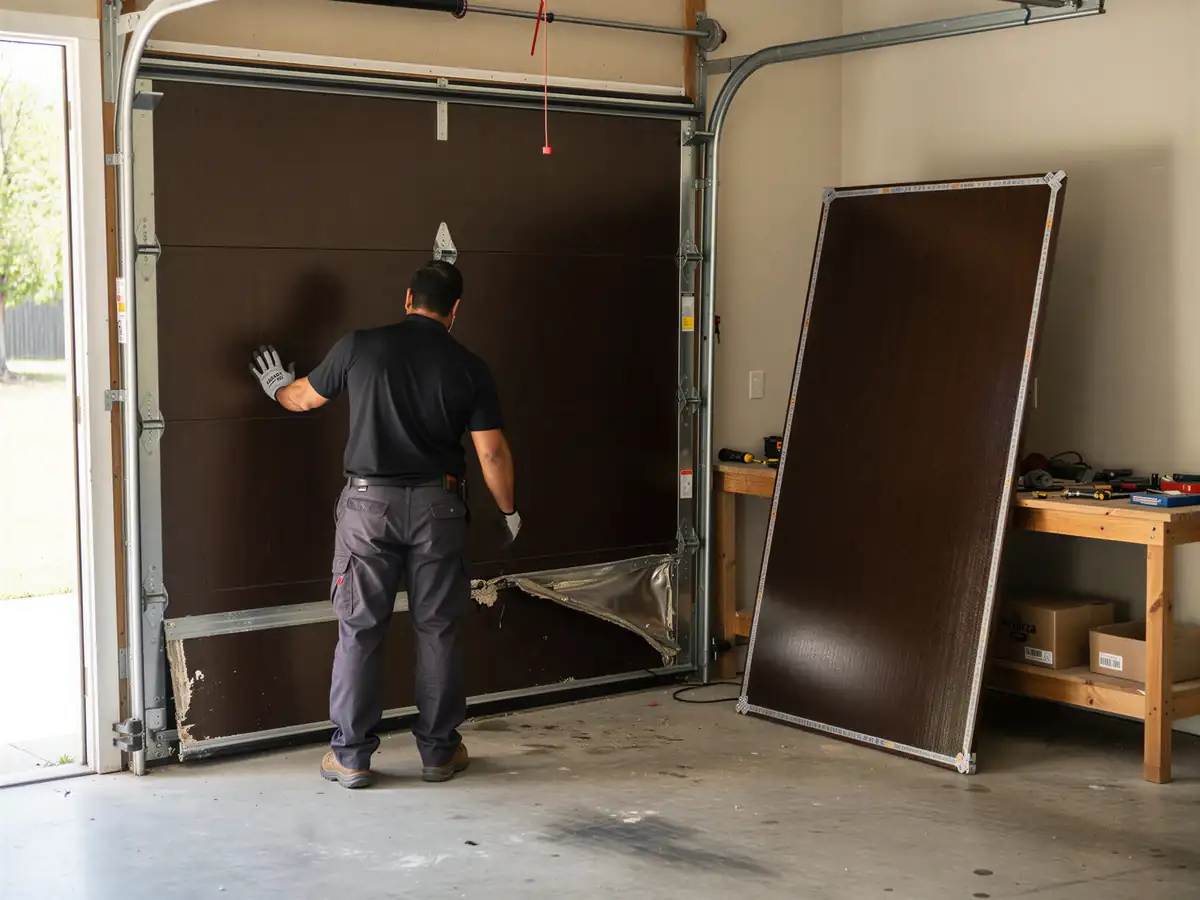
A single-panel swap on a door in otherwise sound shape is a straightforward visit
Multiple panels, or a track that's shifted, adds time because we're not just bolting in steel - we're resetting alignment the door hasn't had in decades.
The Symptom
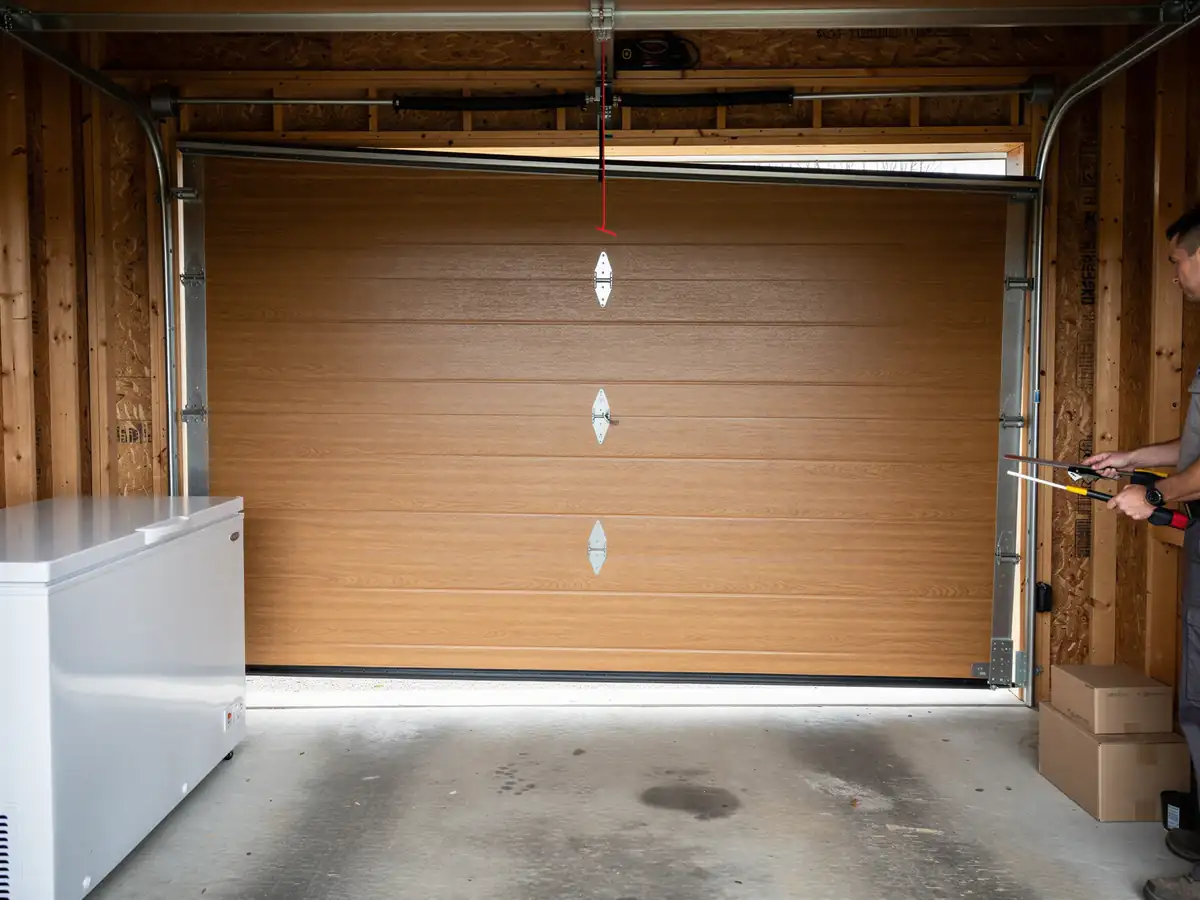
The giveaway on a house built in 1961 is usually a bottom or second panel that's rusted through at the seam or dented enough that the door won't sit flush when it closes. Original steel from that era is thinner than what's made now, and over sixty years of closing against a slab foundation, that bottom panel takes the brunt of every scrape and knock. You'll often see daylight gap at the bottom corner even when the opener still runs fine - the panel's bent, not the mechanism.
Sometimes it's not damage at all but rust working through from the inside, where condensation sat against original hardware with no coating left to protect it. That's a cosmetic problem until it isn't - a rusted-through panel edge stops holding its shape under spring tension.
The DIY Question
Swapping a single garage door panel yourself is possible if the door is a newer sectional model with panels designed to separate cleanly. On a door original to 1961, it's a different animal - the panel sections weren't built with today's tool-free hardware in mind, and prying one loose without knowing how the hinges and end stiles were set originally risks warping the panel next to it.
We're not going to tell you it can't be done. We'll tell you that on hardware this old, the fasteners are often seized, and a stripped bolt on a panel you can't replace locally turns a two-hour job into a week of waiting on a part.
What Can Go Wrong
The real risk on a door this age isn't the panel swap itself
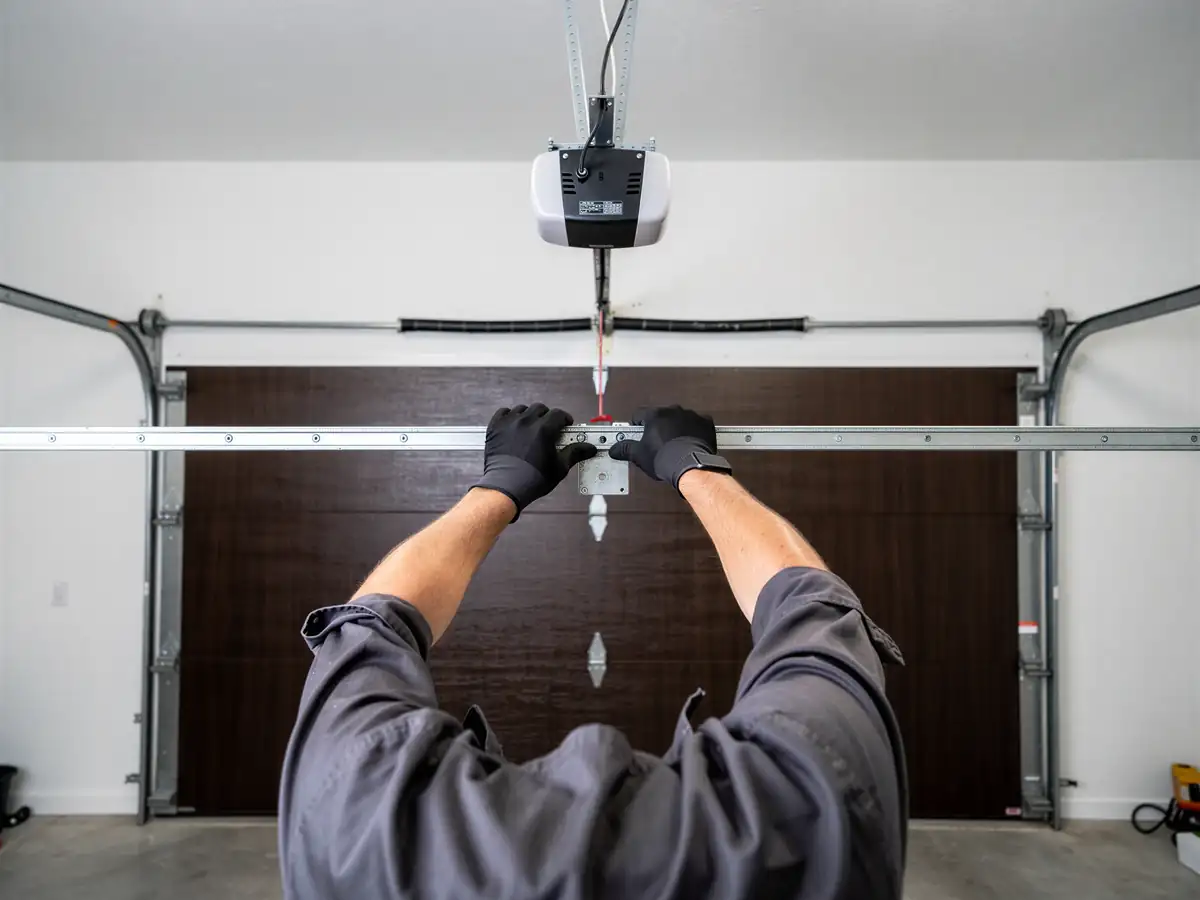
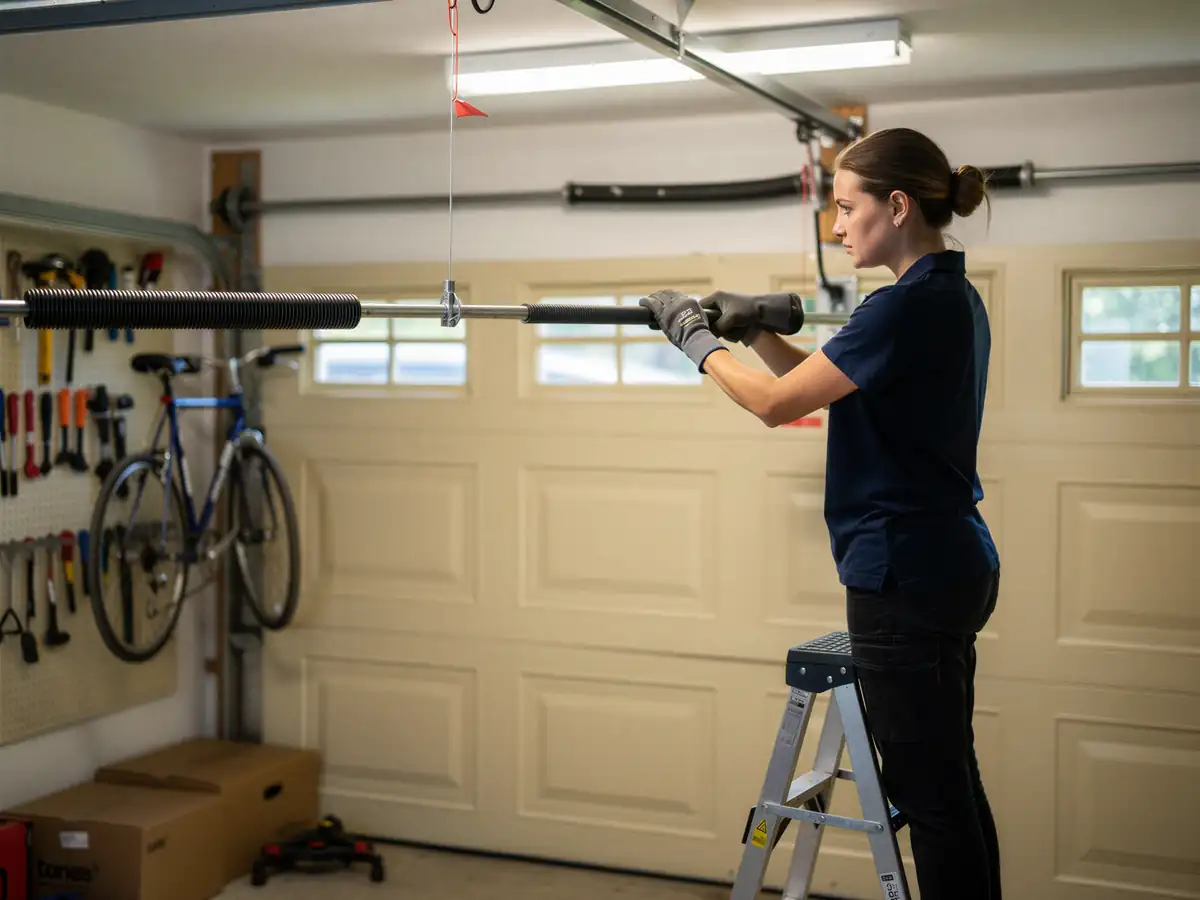
It's what you find once the old panel is off. Tracks that haven't been touched since 1961 can be bowed just enough to bind a new, straighter panel. Springs sized for the original lighter steel panel may not be correctly tensioned for a replacement panel of different weight, which throws the whole door off balance.
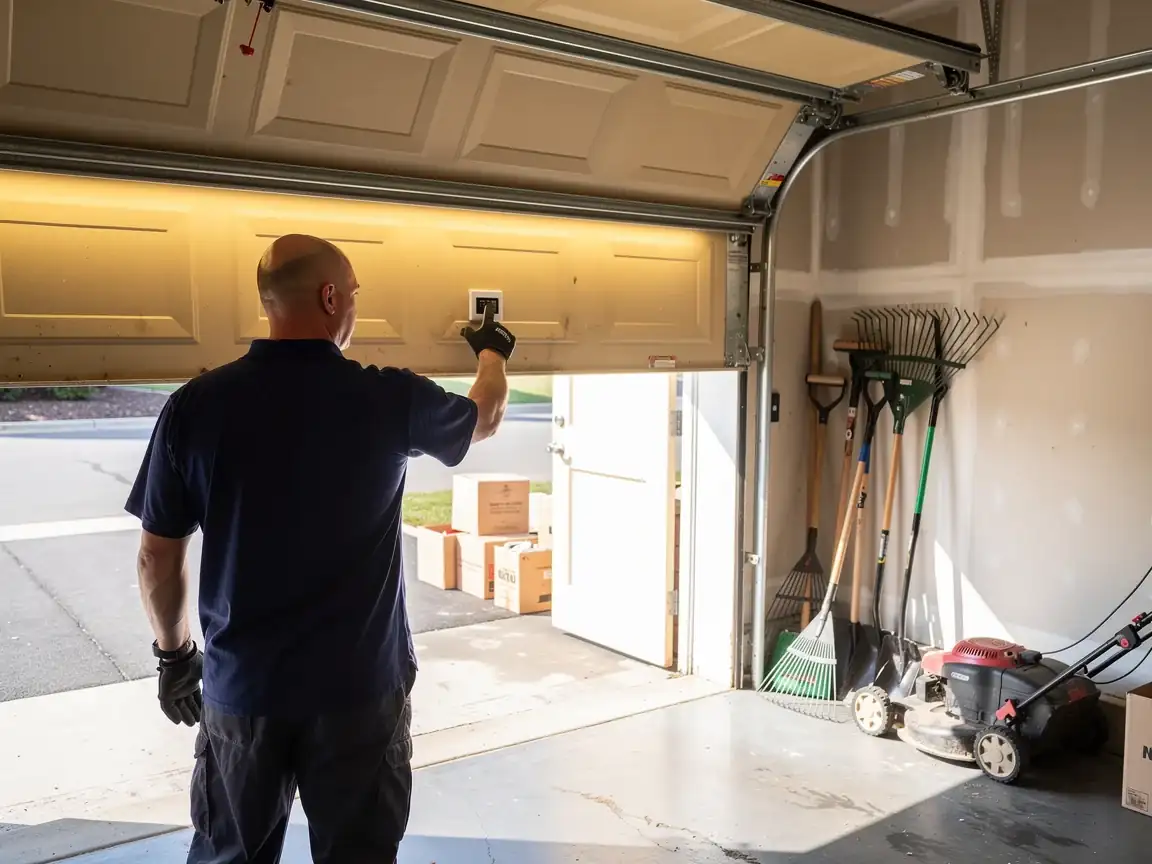
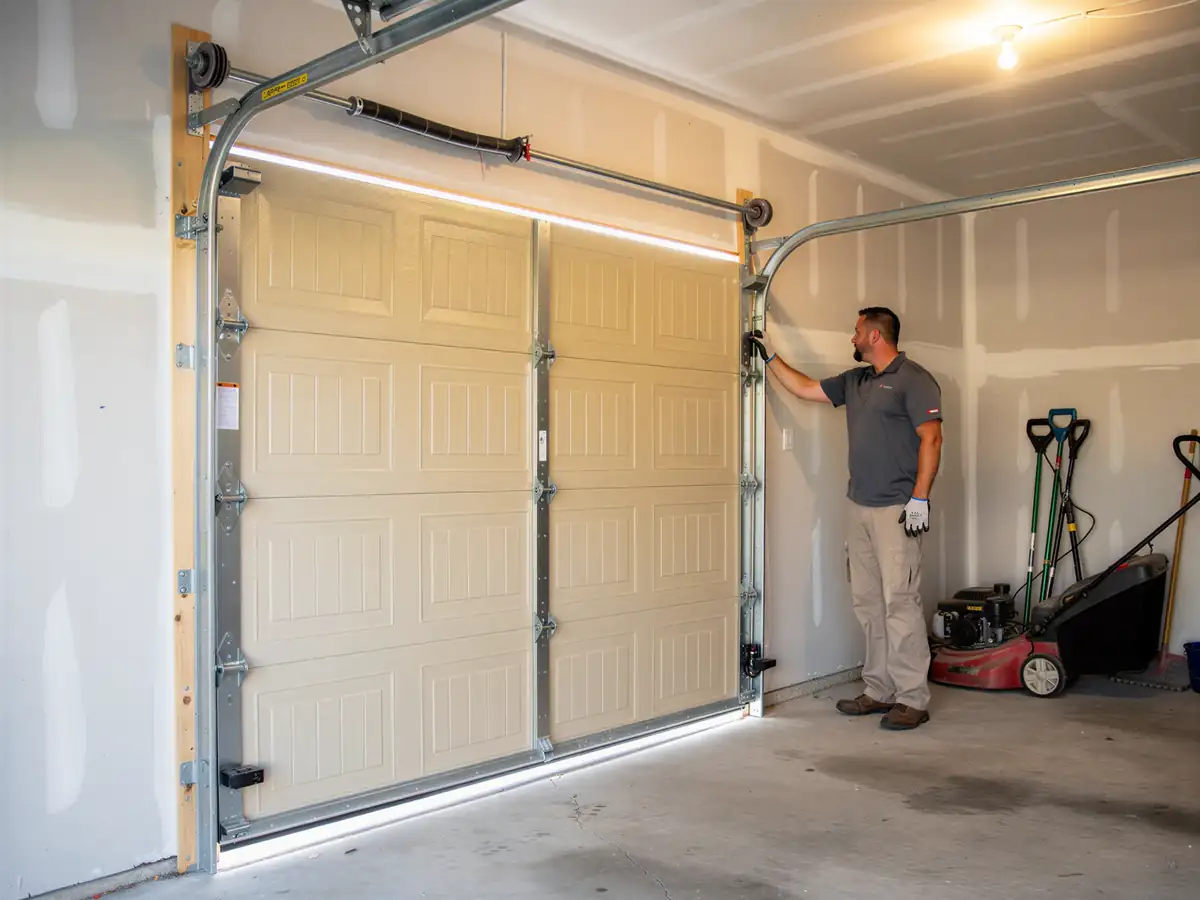
We check balance and track alignment before we call the job done
Not just whether the new panel bolts in. If we find the door needs more than a panel to run safely, we'll tell you what that is and what it costs before we touch it - we don't pad a panel job with extra work you didn't ask for, but we also won't send a door back up unbalanced to save a trip.