Booking a Visit
We run this job out of Norcross, about 13 miles from Belvedere Park, so when you call we're scheduling a drive, not a walk-up visit from a local branch. That's worth knowing up front: we don't keep a depot in the neighborhood, and we won't pretend otherwise. What we can tell you is what to have ready before the truck leaves - the door's rough age, whether it's a single or double, and whether it still moves at all or is jammed solid. A door that's merely crooked on the track is a different call than one that's dropped a roller and is wedged against the frame. Knowing which one you've got helps us bring the right parts the first time instead of a second trip. Houses in this part of the service area tend to run older than the typical stock we see closer to Norcross, so the actual hardware question - torsion versus extension, size of track radius, what era of roller bracket - matters more here than it does on a newer build. We'd rather ask two extra questions on the phone than show up guessing.
If the door's service history or panel age is something you're not sure of, just say so. We'll work it out on site rather than assume.
Stocked Parts
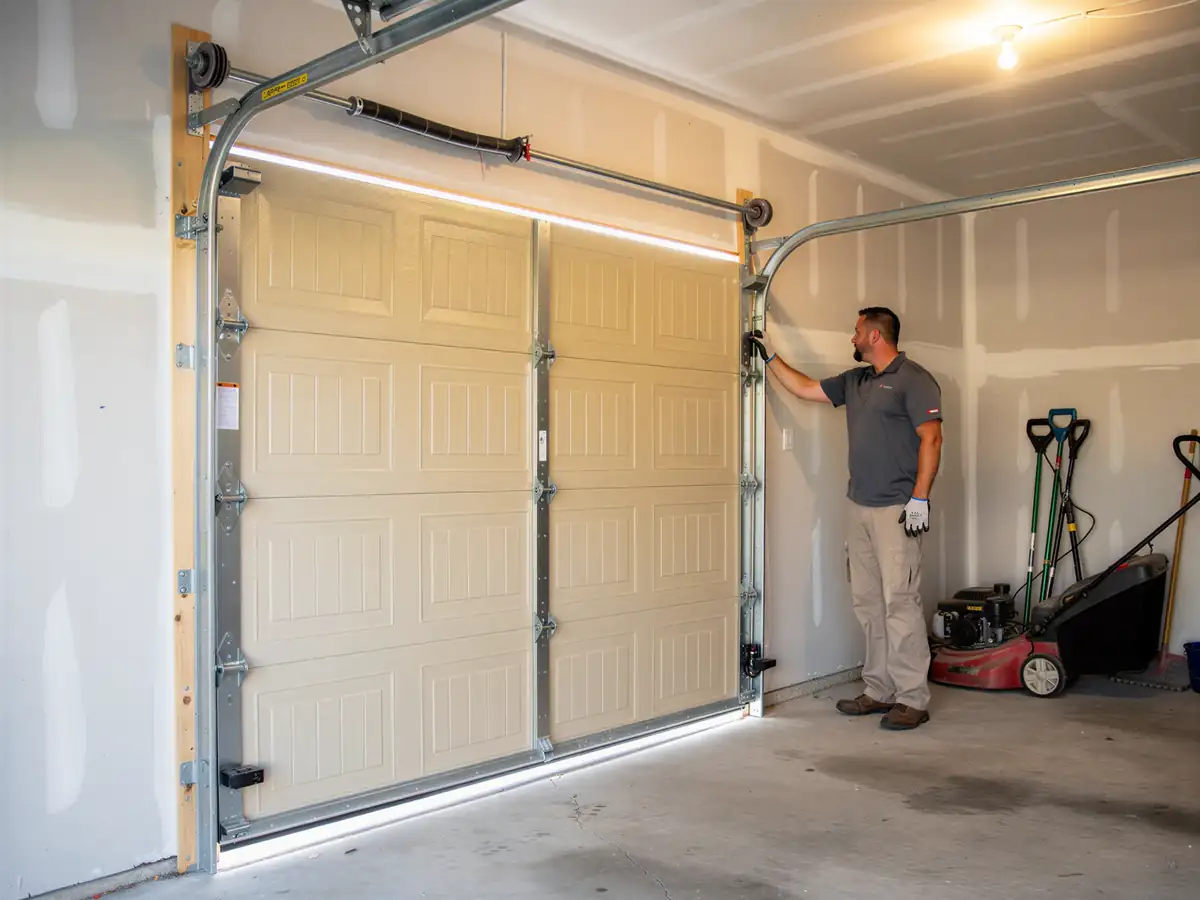
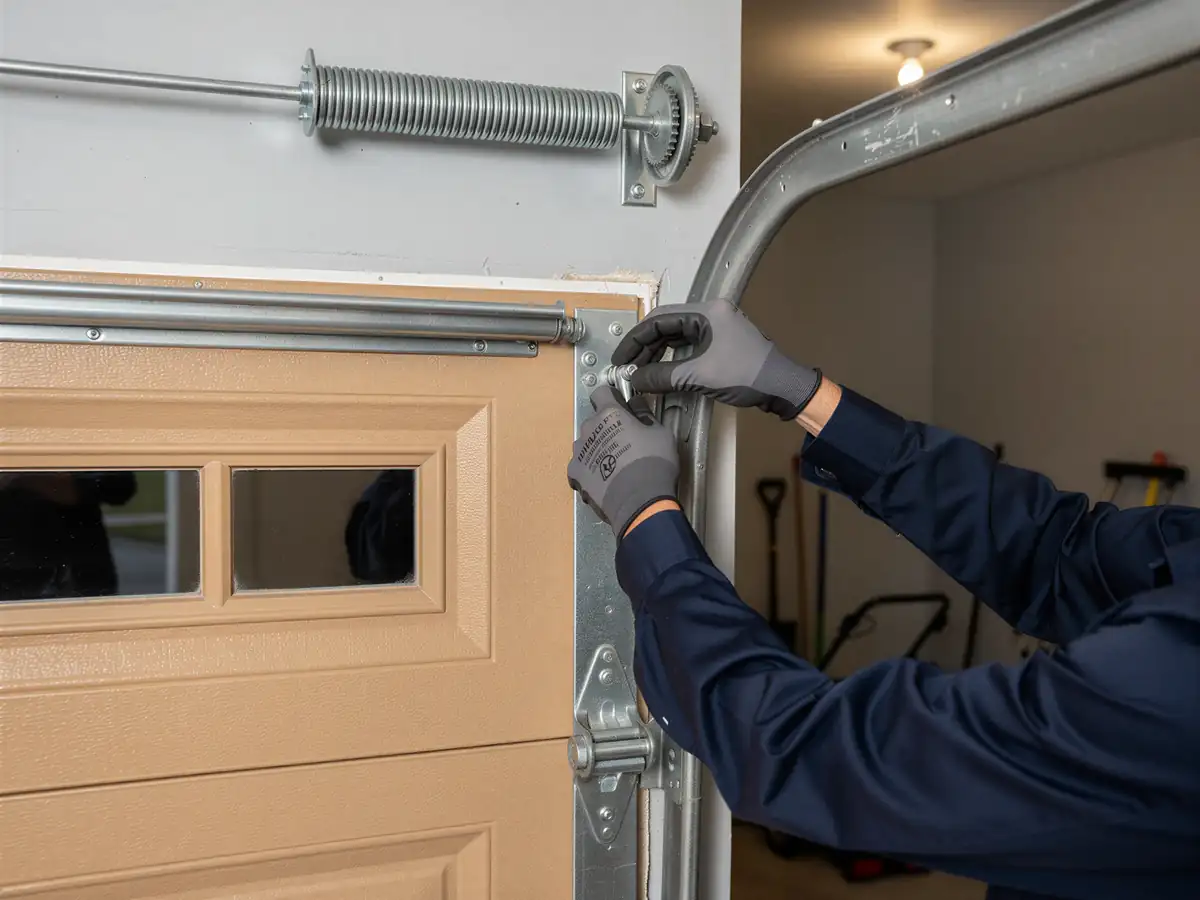
A door built around 1961, which is roughly what the median house in Belvedere Park is working with, often still runs on the older style of track bracket and roller stem that newer production shifted away from. That's about sixteen years earlier than the median build year across the broader service area, and that gap shows up in the hardware: narrower track gauge in some cases, different hinge spacing, sometimes a roller size that doesn't match what ships standard today. We carry common roller, hinge, and track-section stock on the truck, but if your door has a less common bracket pattern from that era, we may need to source it rather than swap it on the spot. That's the honest limit - we're not going to tell you we always have an exact match for a 60-plus-year-old track system, because sometimes we don't, and ordering the right part beats forcing a close one that'll bind again in a year.
When the track itself is bent rather than just knocked loose, replacement is usually the better call over trying to re-true it, especially on older gauge steel that doesn't flex back cleanly.
What the Repair Takes
Getting a door back onto its track starts with figuring out why it left in the first place
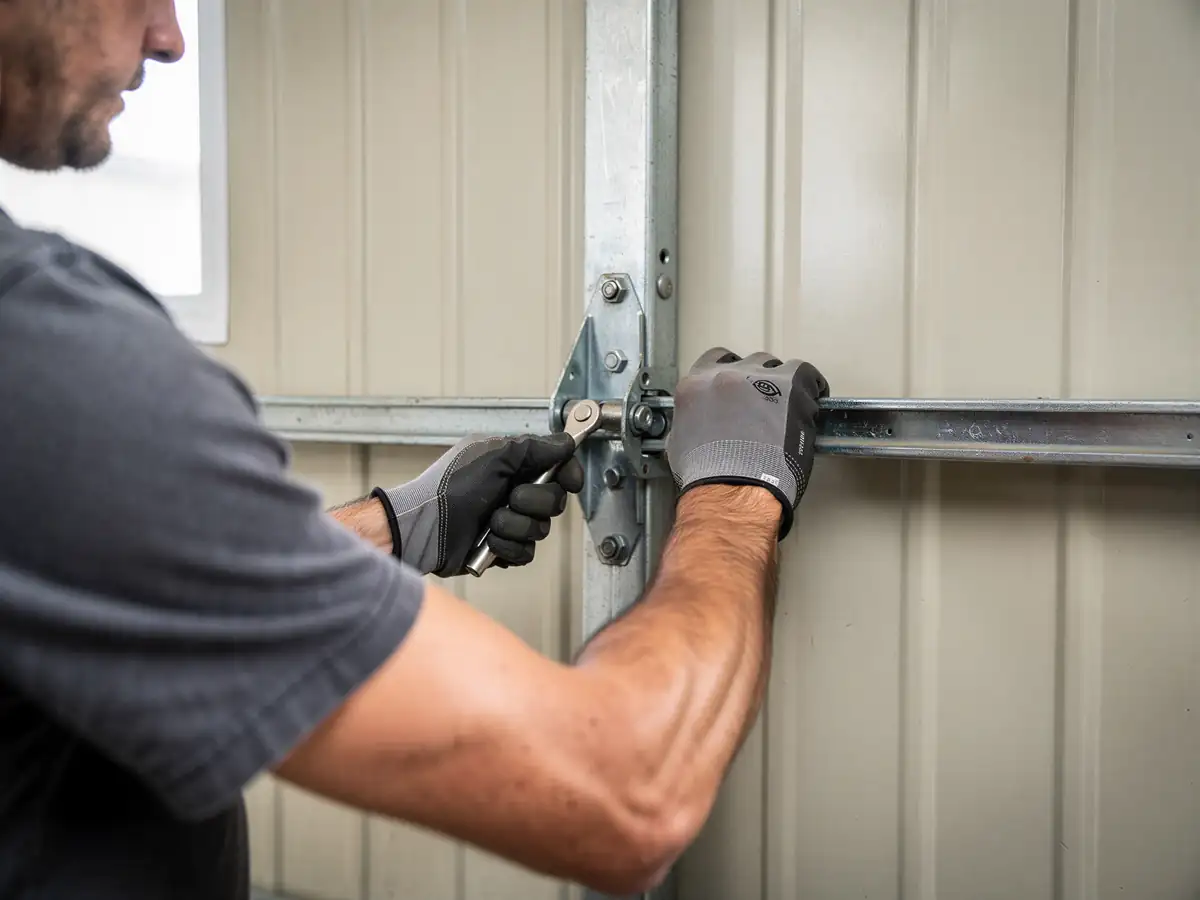
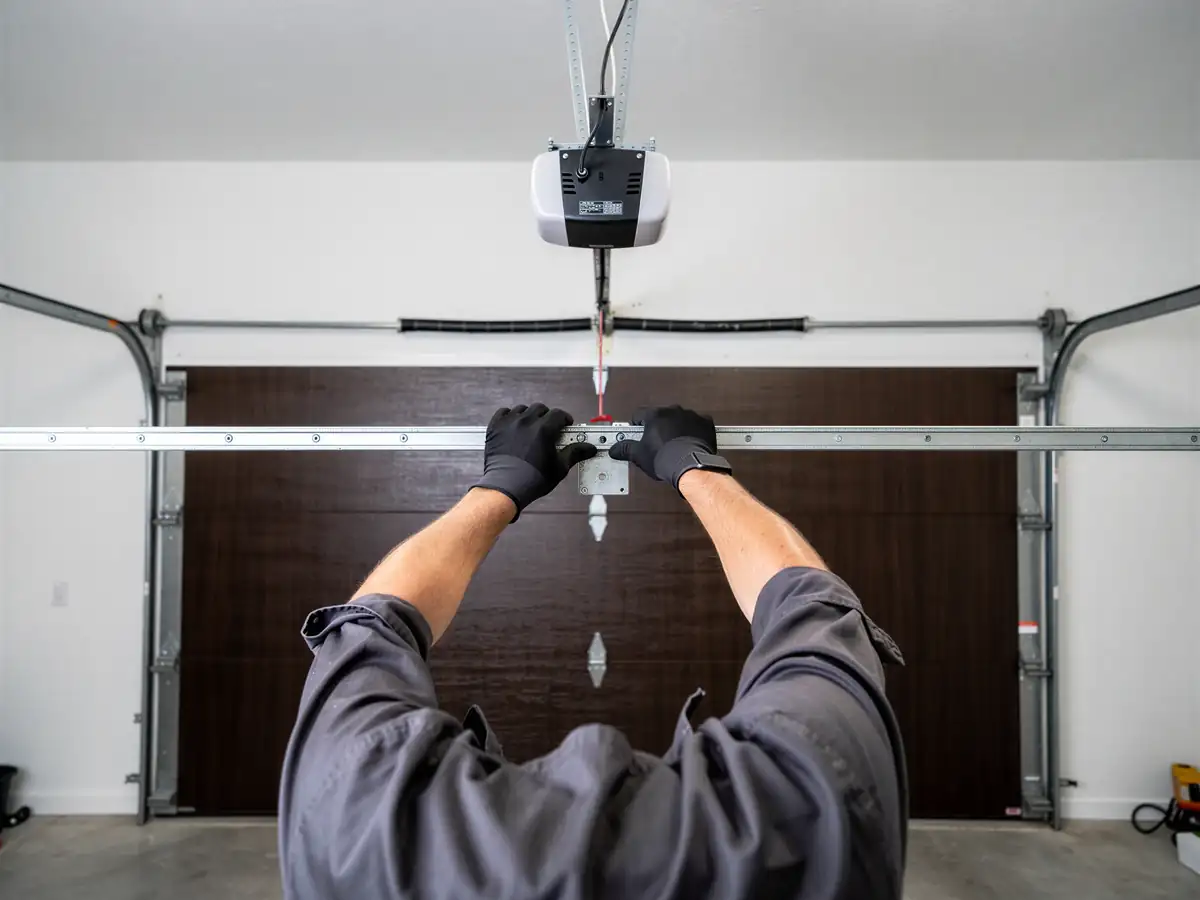
Not just shoving it back in. On a house from the early 1960s stock common in Belvedere Park, the usual culprit is a bent track section or a roller bracket that's worked loose from decades of use, rather than anything dramatic. We check the track alignment top to bottom, look at whether the rollers are the original size or have been swapped at some point, and inspect the cable and spring tension before anything gets forced back into the channel - a door under spring tension that's off its track can be dangerous to move by hand.
Most straightforward off-track jobs we can close out in a single visit once we're on site
Assuming the track itself isn't bent and the panel hasn't been damaged in the process. If a section of track needs replacing to match older spacing, that can add time depending on what we've got on hand versus what needs ordering.
The Symptom
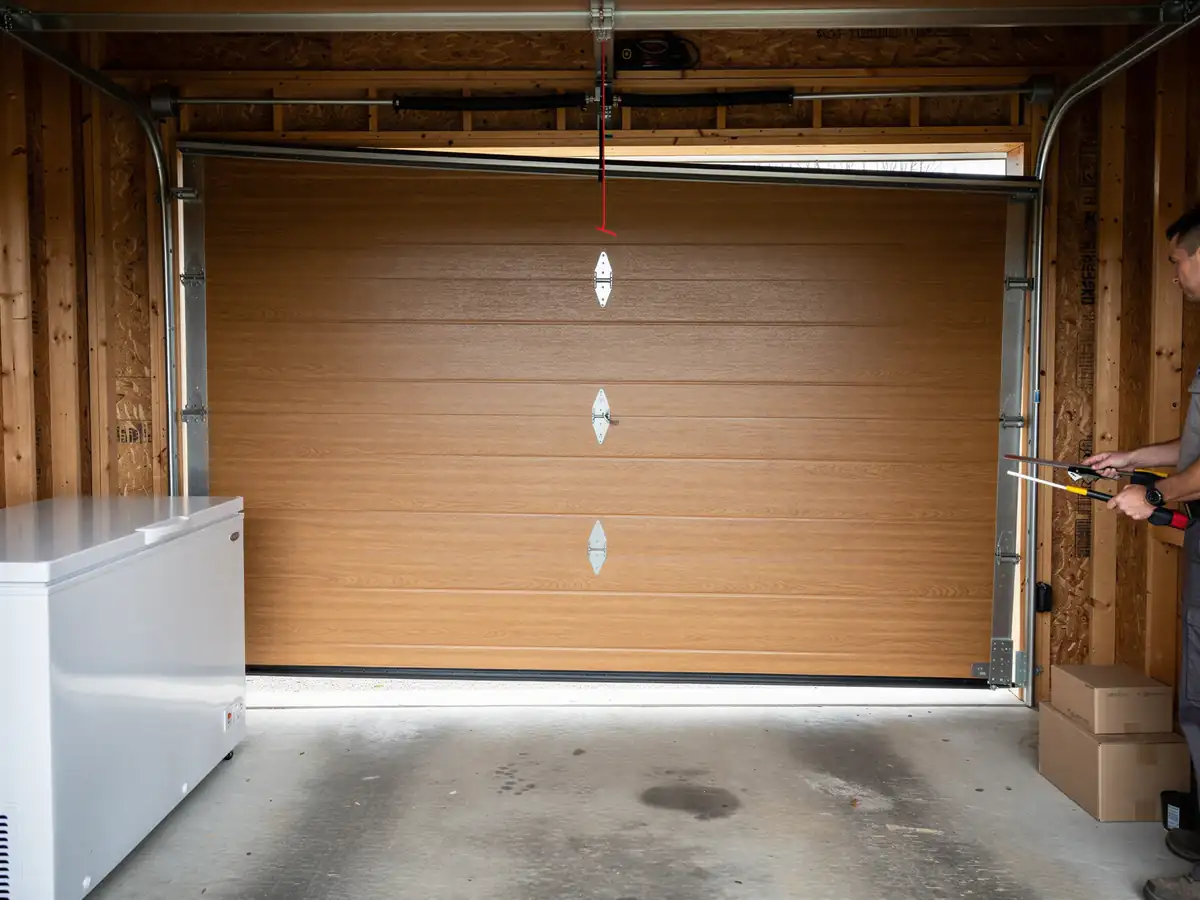
The door usually gives warning before it fully leaves the track - a visible gap between the roller and the rail, a grinding or scraping sound at one spot in the travel, or the door running crooked so one side drags. On older stock like what's common in Belvedere Park, that drag often traces back to a roller bracket that's loosened over the years rather than a sudden impact. Cold, damp winters in this part of Georgia can also stiffen old lubrication on aging hardware, which makes a marginal roller finally catch and jump the rail. If the door stops mid-travel, reverses on its own, or you hear a bang followed by the door sagging on one corner, that's usually the moment it's actually come off, and running the opener again at that point risks bending the track further or pulling the section loose from the wall.
The DIY Question
Tightening a loose track bolt or clearing debris out of the channel is reasonable to do yourself if the door is sitting still and nothing is under tension. Trying to wrestle a panel back onto the rail while the spring is still loaded is not - that's the part that sends people to the ER, not the garage. On a house with original-era hardware like a lot of what we see in Belvedere Park, there's an added wrinkle: older brackets and lag screws can be seized or stripped, and forcing them can crack the jamb they're mounted to. If the door has fully left the track, or you're not certain whether the spring is still under tension, that's the point to stop and call rather than improvise.